
Introduction
Vibration plates are no longer just a gym curiosity. As more people turn to home-friendly fitness solutions, these compact devices are gaining popularity for their promise of efficient workouts with minimal impact. In this post, we’ll show you how vibration plate exercise works, walk through several simple yet effective moves you can start using today, and offer tips to help you get the most out of every session — whether you're new to fitness or just want a quick boost between workouts.
1. Why Vibration Plates Can Be Effective
A vibration plate works by generating rapid oscillations — typically in the range of 20 to 50 vibrations per second — under your feet or hands. These vibrations force your muscles to contract and relax repeatedly, even when you’re simply standing still or doing basic movements.
This means:
-
More muscle fibers are recruited compared to static standing or slow movement, which can enhance strength and tone.
-
Lower-impact: because there's no jumping or heavy loading on joints, vibration plates are gentler and more joint-friendly — a plus for people with limited mobility or joint sensitivity.
-
Better circulation and muscle recovery: the repeated contractions help stimulate blood flow and lymphatic drainage, which can aid recovery, reduce stiffness, and support overall mobility.
That said — vibration plates are not a magic shortcut. Most experts agree they serve best as a supplement to, not a replacement for, traditional strength training and cardio.
2. Great Vibration Plate Exercises to Try at Home
Here are some beginner-friendly, effective exercises you can do on a vibration plate — no heavy equipment needed:
-
Bodyweight Squats
Stand on the plate with feet shoulder-width apart, toes slightly out. Squat down slowly and stand up, keeping control. The vibration adds challenge, engaging more leg and core muscles than a standard squat. -
Lunges
Place one foot on the plate and step back with the other. Lower into a lunge, then push back up. Switch legs after each set. This works quads, hamstrings, glutes — and your balance. -
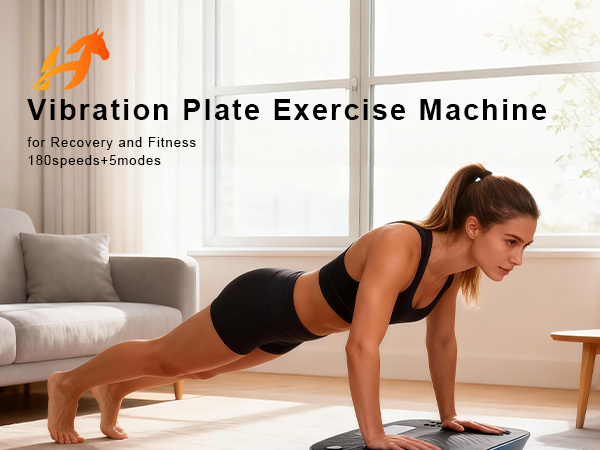
Plank (Forearms or Hands on Plate)
Hands or forearms on the plate, body in straight line from head to heels. Engage your core, keep hips steady. Even a 20–30 second hold adds core and stability challenge thanks to the vibration. -
Glute Bridge (Feet on Plate)
Lie on your back, feet on the plate, knees bent. Press hips upward, squeeze glutes, then lower. Vibration helps activate glutes and hamstrings more than a regular bridge. -
Calf Raises
Stand on the plate, rise up onto your toes, then slowly lower. Good for calves and balance, and vibration helps with coordination and lower-leg activation.
You can also combine vibration with upper-body movements — push-ups, dips, even light resistance-band work — but always focus first on proper form and stable posture before adding complexity.
3. Suggested Routine & How Often to Use
Here’s a beginner-friendly sample routine using a vibration plate:
| Frequency | Duration | Sample Workout Setup |
|---|---|---|
| 2–4 times per week | 10–20 minutes per session | Squats + Lunges + Plank + Calf Raises |
| 1–2 times per week (recovery days) | 5–10 minutes | Light standing + gentle stretching or mobility work |
Tips for safe, effective use:
- Start with low to moderate vibration frequency (especially if you’re new).
- Always keep knees slightly bent and core engaged — avoid locking joints.
- Use vibration plate as complementary tool, not main cardio or strength method.
- Combine with balanced nutrition and regular movement for best results.
4. Who Might Benefit Most (and Who Should Be Cautious)
Great For:
- Beginners or people returning after a long break
- Individuals needing joint-friendly, low-impact workouts
- Busy people — quick, effective sessions
- People needing improved muscle activation, circulation, mobility
Be Cautious / Check With Doctor If You Have:
- Recent surgery, fractures, or serious bone/joint issues
- Heart problems, circulatory disorders, or certain chronic conditions
- Pregnancy or other health risk factors
Because vibration plates add mechanical stress in a different way, it's wise to get medical advice if you have preexisting conditions before starting.
Conclusion: Vibration Plate Exercise — A Smart Supplement, Not a Magic Bullet
Vibration plates work — but their real value lies in being a smart supplement, not a magic replacement. Used properly, they:
- Help you activate and tone muscles more efficiently
- Offer a joint-friendly way to train
- Support circulation, mobility, recovery
- Fit easily into a home environment and busy schedule
If you combine vibration plate exercise with good nutrition, regular strength or cardio training, and healthy habits — you could see meaningful improvements in strength, tone, and overall fitness.
Just remember: consistency, proper form, and realistic expectations matter most. Treat the vibration plate as a useful tool in your fitness toolbox — not a shortcut to instant results.
At Hophorse, we’re committed to making home fitness simple, effective, and accessible. Every vibration plate is designed with real users in mind—so you can feel results, not frustration.
Share:
Do Vibration Plates Work? Real Benefits & What to Know
What Is a Vibration Plate? A Complete Guide to a Vibration Plate