
If you're looking for a simple vibration plate workout plan that fits into a busy schedule, you don't need to spend an hour exercising to build a consistent routine. A well-structured 10-minute vibration plate workout can help you add more movement to your day while keeping your routine approachable and low impact. Whether you're just getting started with home fitness, returning after a break, or simply looking for an easy way to stay active, a short workout can feel much more achievable than a lengthy training session. With a few beginner-friendly exercises and gradual progression, it's possible to create a daily habit that supports an active lifestyle without overwhelming your schedule.

- A 10-minute workout is long enough for most beginners to establish a consistent daily movement habit.
- Simple standing exercises often work better than advanced movements during the first few weeks.
- Focus on proper posture, controlled movements, and gradual progression instead of higher intensity.
- Consistency is generally more valuable than occasional long workouts.
Why a 10-Minute Vibration Plate Workout Works
One of the biggest challenges for busy adults isn't finding the perfect workout—it's finding one they'll actually stick with. Long fitness sessions can be difficult to fit into a busy day, especially for working professionals, parents, and women balancing multiple responsibilities.
A 10-minute vibration plate workout removes many of those barriers. Because the workout is short, it feels manageable enough to complete before work, during a lunch break, or while relaxing at home in the evening. Many people find that shorter routines are easier to repeat consistently, helping build a sustainable long-term habit.
Another advantage is that vibration plate workouts are naturally low impact. Beginners can start with simple standing positions, gentle squats, and light balance exercises before gradually adding more movement as they become comfortable with the platform.
If you're completely new to vibration training, it's worth reading our guide on how to use a vibration plate before starting your first workout.
The Complete 10-Minute Vibration Plate Workout Plan
The routine below is designed specifically for beginners and everyday home fitness users. Perform each exercise slowly and maintain a slight bend in your knees throughout the workout.
| Time | Exercise | Focus |
|---|---|---|
| 2 Minutes | Comfortable Standing Position | Get used to the vibration and establish good posture. |
| 2 Minutes | Soft Knee Bends | Maintain balance while adding gentle lower-body movement. |
| 2 Minutes | Mini Squats | Practice controlled movement with a comfortable range of motion. |
| 2 Minutes | Calf Raises | Work on lower-leg stability and balance. |
| 2 Minutes | Standing Stretch & Cooldown | Finish the session with relaxed, controlled stretching. |

1. Comfortable Standing Position (2 Minutes)
Begin by standing with your feet about shoulder-width apart and your knees slightly bent. Keep your shoulders relaxed and your core gently engaged while allowing your body to become familiar with the vibration. This first stage isn't about intensity—it's simply about feeling stable and comfortable on the platform.
If this is your first session, choose one of the lower speed settings and avoid making sudden movements. Becoming comfortable with the machine is the best foundation for future workouts.
2. Soft Knee Bends (2 Minutes)
Without changing your foot position, slowly bend and straighten your knees through a comfortable range of motion. Avoid locking your knees or bouncing quickly. Slow, controlled movement is usually easier for beginners and helps you maintain balance throughout the exercise.
If needed, lightly hold onto a nearby chair or countertop until you feel more confident.
3. Mini Squats (2 Minutes)
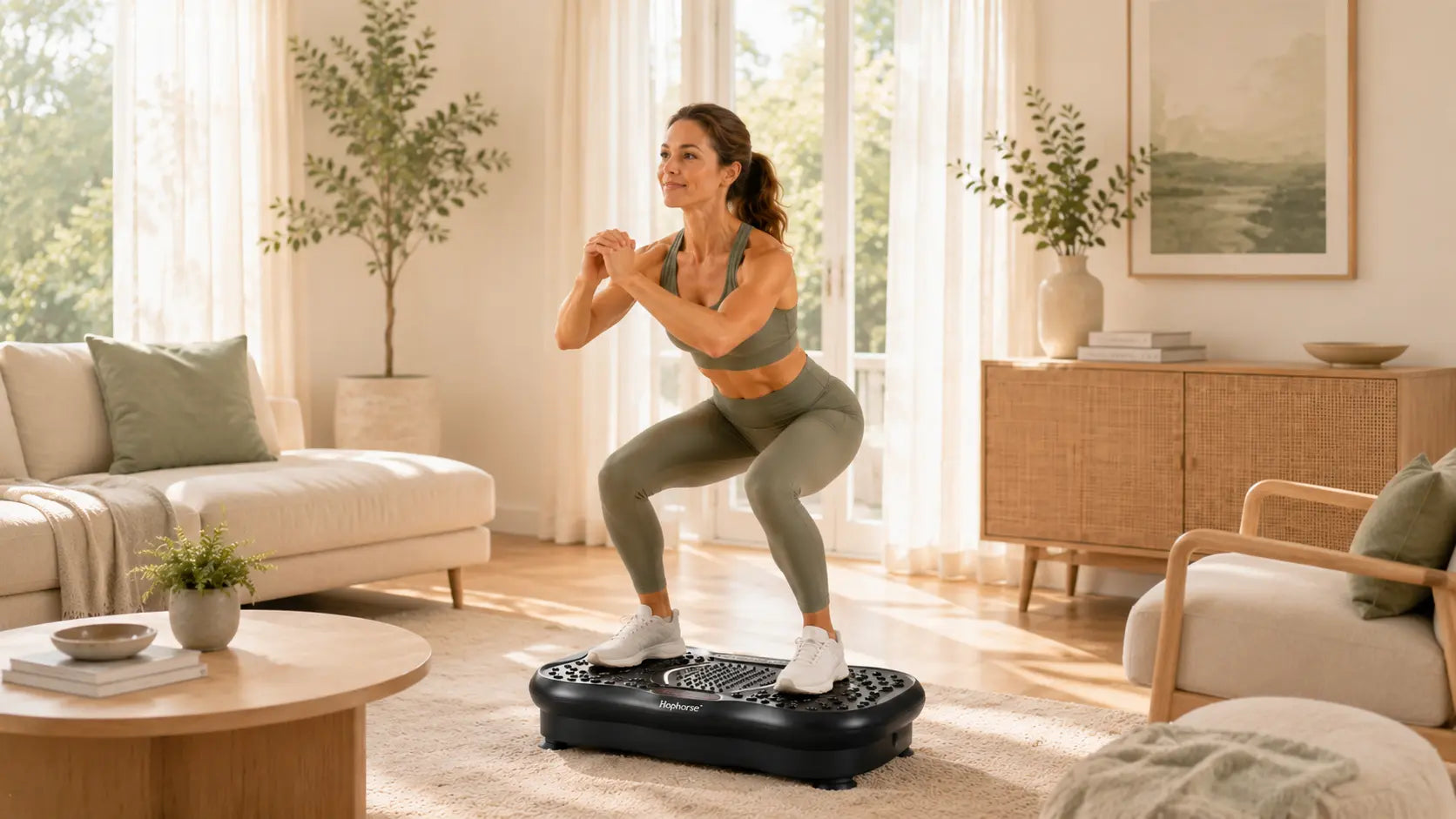
Lower your body into a shallow squat before returning to a standing position. There's no need to squat deeply. Focus on keeping your chest lifted, your knees aligned with your feet, and your movements smooth and controlled.
Many beginners find mini squats easier than full squats while still allowing them to add more movement to the workout.
4. Calf Raises (2 Minutes)
Lift your heels slowly until you're standing on the balls of your feet, then lower them back down with control. This exercise encourages balance and coordination while remaining approachable for most users.
If balance feels challenging, place one hand on a stable surface until you become more comfortable.
5. Standing Stretch & Cooldown (2 Minutes)
Finish your workout by performing gentle stretches while standing on the platform. Keep every stretch comfortable and avoid forcing your body into a larger range of motion than feels natural. Many users enjoy ending each session with relaxed breathing and slow upper-body mobility exercises.
It's completely normal if your first few workouts feel simple. Building a routine that you can comfortably repeat several times each week is usually more valuable than trying to make every session difficult.
How to Progress Your Workout Over Time
Once your first few workouts begin to feel comfortable, you don't necessarily need to make dramatic changes. Small adjustments are often enough to keep your routine interesting while allowing your confidence to grow.
For many beginners, progression might include slightly increasing the vibration speed, adding another minute to the session, or introducing simple upper-body movements using the included resistance bands. These gradual changes help keep the workout engaging without making it feel overwhelming.
Rather than chasing intensity, aim for consistency. Completing a 10-minute workout several days each week is often easier to maintain than occasional longer sessions.
Common Beginner Mistakes to Avoid
Starting with good habits can make your workouts more enjoyable and easier to maintain. Many first-time users make the mistake of focusing on intensity instead of consistency. A vibration plate is designed to support regular movement—not to replace every other form of exercise.
- Start with lower speed settings.
- Keep a slight bend in your knees.
- Focus on slow, controlled movements.
- Wear supportive athletic shoes if recommended by the manufacturer.
- Exercise on a flat, stable floor.
- Increase speed or workout time gradually.
- Jump directly to the highest vibration setting.
- Lock your knees while standing.
- Rush through each exercise.
- Attempt difficult balance exercises immediately.
- Ignore discomfort or dizziness.
- Expect dramatic results after only a few sessions.

Choosing the Right Vibration Plate for This Workout
The best workout plan is one that feels comfortable enough to repeat consistently. Choosing a stable, beginner-friendly vibration plate can make that process easier.
For most beginners, the Hophorse Whole Body Vibration Plate is a practical starting point thanks to its compact design, adjustable speed levels, quiet operation, and simple controls that make daily home workouts approachable.
If you're looking for additional stability, higher weight capacity, and more room to progress over time, the Hophorse Pro Max Vibration Plate may be a better fit for your long-term fitness routine.
You can also compare all available Hophorse vibration plates to find the model that best fits your home, workout goals, and experience level.
Safety Tips Before You Begin
Most healthy adults can safely perform gentle vibration plate exercises when following the manufacturer's instructions. However, everyone's health situation is different, so it's important to listen to your body throughout every session.
If you are pregnant, have a pacemaker, recently had surgery, have heart conditions, blood clot risk, or severe osteoporosis, consult a healthcare professional before use.
Stop your workout immediately if you experience dizziness, unusual discomfort, or feel unstable while exercising. Beginners should always prioritize proper posture, balance, and gradual progression over higher intensity.

Making Your 10-Minute Routine a Daily Habit
The biggest advantage of a 10-minute workout isn't that it's short—it's that it's realistic. Many people find it much easier to stay consistent with a routine that fits naturally into everyday life.
Try scheduling your workout at the same time each day. Some users enjoy exercising in the morning before work, while others prefer a quick movement break during lunch or a relaxing evening routine. Finding a schedule that works for you is often more important than choosing the perfect workout.
Remember that consistency usually matters more than intensity. A simple workout completed several times each week can become an effective part of a long-term home fitness routine.
Frequently Asked Questions
Is a 10-minute vibration plate workout enough?
For many beginners, yes. A 10-minute session can be an approachable way to build a consistent movement routine at home. As your confidence grows, you can gradually adjust your workout based on your goals and comfort level.
Can I do this workout every day?
Many people include short vibration plate sessions in their daily routine. Pay attention to how your body feels and allow yourself to rest when needed.
What speed should beginners use?
Most beginners feel more comfortable starting at a lower speed setting before gradually increasing intensity as they become familiar with the platform.
Should I wear shoes on a vibration plate?
Follow the recommendations in your product manual. Many users wear supportive athletic shoes, while others may prefer barefoot use if the manufacturer indicates it's appropriate.
Where can I learn more about using a vibration plate?
You can read our guides on how to use a vibration plate, learn how long should you use a vibration plate, or explore the complete collection of Hophorse vibration plates.
Share:
Vibration Plate Exercises for Beginners
Best Vibration Plate for Home Use