
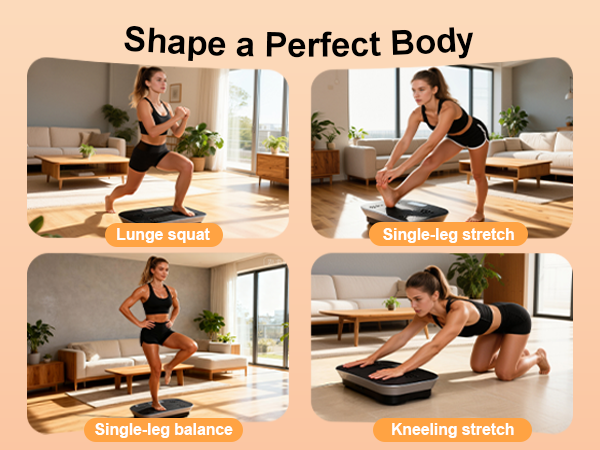
If you’ve recently bought a vibration plate, you might be wondering:
- Am I supposed to just stand on it?
- Are there specific exercises I should do?
- Which positions actually work best?
The truth is, different positions on vibration plate activate different muscle groups. Simply standing still can help, but using intentional positions can dramatically improve your results.
In this guide, we’ll break down the most effective positions, what muscles they target, and how to use them safely.
1. Basic Standing Position (Beginner-Friendly)
This is the most common starting point.
How to do it:
- Stand with feet shoulder-width apart
- Keep your knees slightly bent (never locked)
- Engage your core
- Maintain an upright posture
Muscles worked:
- Thighs
- Calves
- Core stabilizers
This position is ideal for beginners or for warming up before more challenging movements.
Pro Tip: Slightly bending your knees helps absorb vibration and reduces stress on your joints.
2. Squat Position (Lower Body Focus)
One of the most effective positions on vibration plate for toning.
How to do it:
- Stand with feet slightly wider than shoulder-width
- Lower into a half squat (about 45–60 degrees)
- Keep your chest lifted and core engaged
Muscles worked:
- Glutes
- Hamstrings
- Quadriceps
The added vibration increases muscle activation compared to a regular squat.
Start with 30–60 seconds per set.
3. Lunge Position (Balance & Strength)
Great for targeting one leg at a time.
How to do it:
- Place one foot on the plate
- Step the other foot back onto the floor
- Bend the front knee into a lunge
Muscles worked:
- Glutes
- Thighs
- Stabilizing muscles
This position helps improve muscular balance between legs.
4. Plank Position (Core Strength)
If your goal is core engagement, this one is powerful.
How to do it:
- Place forearms or hands on the vibration plate
- Extend legs behind you
- Keep your body in a straight line
Muscles worked:
- Abdominals
- Deep core muscles
- Shoulders
The vibration forces your core to work harder to stabilize, making it more challenging than a traditional plank.
5. Seated Position (Recovery & Circulation)
Not all positions need to be intense.
How to do it:
- Sit on the edge of the plate
- Keep your feet on the floor
- Sit upright
Benefits:
- Encourages circulation
- Relaxes lower body muscles
- Great for post-workout recovery
This is especially helpful after long periods of sitting.
6. Single-Leg Stand (Advanced Balance)
Best for more experienced users.
How to do it:
- Stand on one foot
- Lift the other slightly off the platform
- Engage your core to maintain balance
Focus:
- Balance
- Ankle stability
- Core control
Keep sessions short and controlled.
7. Upper Body Support (Arm & Chest Activation)
Vibration plates aren’t just for legs.
How to do it:
- Place hands on the plate
- Perform push-ups or hold a high plank
Muscles worked:
- Chest
- Arms
- Shoulders
The vibration increases muscle engagement in the upper body as well.
How to Choose the Right Position for Your Goal
Different positions on vibration plate serve different purposes:
- Improve circulation: Basic standing
- Tone legs and glutes: Squats and lunges
- Strengthen core: Planks
- Enhance balance: Single-leg stand
- Promote recovery: Seated position
Switching between positions creates a more balanced full-body routine.
Safety Tips for Using Different Positions
- Always keep knees slightly bent
- Start with lower intensity levels
- Maintain proper posture
- Limit sessions to 10–15 minutes
- Stop immediately if you feel dizzy or uncomfortable
Form matters more than speed or intensity.
Common Mistakes to Avoid
- Standing with locked knees
- Using maximum intensity right away
- Ignoring posture
- Overtraining without rest
Using the correct positions consistently will deliver better results than simply increasing vibration speed.
Final Thoughts
Understanding the best positions on vibration plate helps you turn a simple machine into a versatile full-body workout tool.
It’s not just about standing still. It’s about moving intentionally, targeting specific muscle groups, and staying consistent.
If you’re looking for a stable, well-built vibration plate that supports a wide range of exercises, Hophorse vibration plates are designed with strong platforms, adjustable intensity, and home-friendly performance in mind. Whether you’re focusing on toning, balance, or recovery, choosing a reliable machine makes every position more effective.
👉 Explore the Hophorse collection and find a vibration plate that fits your space and fitness goals.
Share:
Whole Body Vibration Plate Reviews: An Honest Buyer’s Guide
Purpose of Vibration Plate: What Is It Really Used For?