
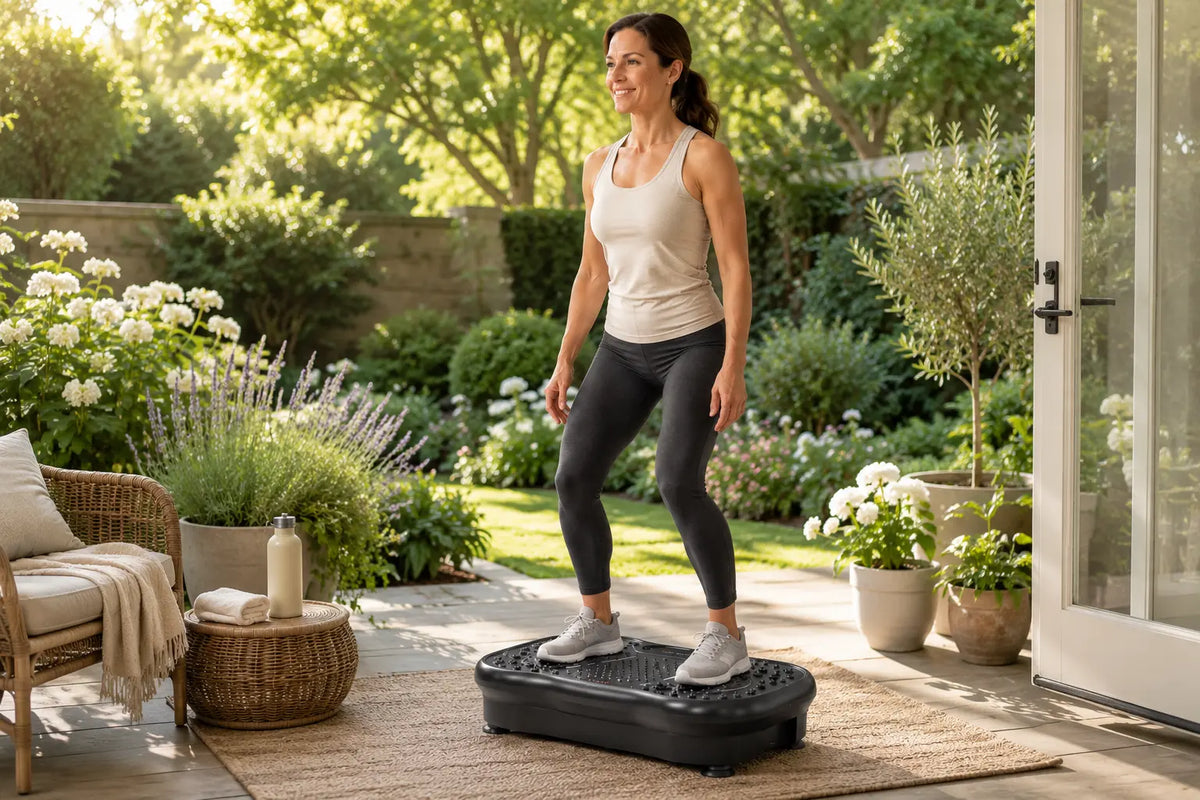

If you are wondering how to use a vibration plate, the best place to start is simple: set it on a stable surface, choose a comfortable low speed, stand with your knees slightly bent, and focus on controlled movement. You do not need an advanced workout or a long session to get started. A vibration plate can be used for relaxed standing, light knee bends, calf raises, resistance-band movements, and other beginner-friendly exercises at home. For many people, a short 5–10 minute routine is an easy way to add more movement to a busy day. The key is to learn the equipment gradually, pay attention to how your body responds, and follow the instructions for your specific model.
This guide walks through how to set up a vibration plate, how to stand on one correctly, how to choose a starting speed, which exercises are suitable for beginners, and how to build a practical routine you can repeat consistently.
Key Takeaways
- Start with a stable setup and a comfortable lower speed.
- Keep your knees slightly bent and focus on balance.
- Begin with simple movements before trying more demanding exercises.
- A 5–10 minute routine can be a practical starting point for beginners.
- Increase time or intensity gradually rather than changing everything at once.
- Always follow the instructions provided with your specific vibration plate.
How Do You Use a Vibration Plate?
Using a vibration plate does not have to be complicated. For a first session, place the machine on a flat, stable surface and make sure you have enough room to step on and off safely. Keep the controls or remote within easy reach, then start at a comfortable setting.
Once the platform is running, stand naturally with your feet positioned comfortably and keep a slight bend in your knees. Avoid locking your joints. From there, you can simply stand and become familiar with the sensation before adding small movements such as knee bends or calf raises.
The experience will vary depending on your position, speed setting, exercise, and session length. A relaxed standing position will feel different from a shallow squat or a resistance-band movement. There is no need to start with the highest setting.
Step 1: Set Up Your Vibration Plate
A good setup makes a vibration plate easier to use consistently. Choose a level, stable floor with enough open space around the machine. A living room, bedroom, apartment workout corner, or other suitable home fitness area can work well.
Place the vibration plate on a firm, level surface. Avoid using it on an unstable or uneven area. Check your product manual for any specific placement instructions.
Position the machine so you can comfortably see the controls or use the remote without reaching awkwardly while standing on the platform.
If your model includes resistance bands, attach them according to the product instructions before beginning your session.
Leave enough room to step onto and off the platform comfortably. Keep nearby furniture or other objects from interfering with your movement.

Step 2: Learn the Right Standing Position
Before trying exercises, spend a few minutes learning how the platform feels. Stand near the center with your feet in a comfortable position and keep your knees slightly soft.
Keep your weight distributed evenly between both feet and maintain a relaxed, upright posture. You do not need to stand rigidly. A natural stance makes it easier to stay balanced and adjust to the movement.
If you are new to vibration training, hold onto a nearby stable support only when necessary for balance and make sure you can step off the platform safely. Avoid rushing into deep squats, fast movements, or higher intensity settings until you feel comfortable with basic standing.
Step 3: Choose a Comfortable Speed
One of the most common beginner questions is what speed to use on a vibration plate. There is no single setting that is right for everyone because different machines use different controls and vibration patterns.
Instead of choosing a number based on someone else's workout, begin with a lower or comfortable setting on your Hophorse model. Spend some time standing and adjusting your position before increasing the intensity.
When you are ready to progress, change one variable at a time. For example, you can slightly increase the speed while keeping the exercise simple, or keep the same speed while adding a small movement. This makes it easier to understand how your body responds.
| Experience | Starting Approach | Focus |
|---|---|---|
| New user | Lower, comfortable setting | Balance and familiarity |
| Getting comfortable | Gradually increase intensity | Controlled movement |
| Regular user | Adjust based on exercise and comfort | Consistent home routine |
Hophorse models offer different speed ranges and controls, so use the manual for your specific machine rather than assuming that the same number will feel identical across models.
Step 4: Try Beginner-Friendly Vibration Plate Exercises
Once you are comfortable standing on the platform, you can add simple movements. The goal is controlled exercise that fits your current fitness level rather than complicated choreography.
1. Relaxed Standing
Start with relaxed standing for one or two minutes. Keep your feet comfortably positioned, your knees slightly bent, and your posture upright. This is an easy way to learn how the vibration feels before adding movement.
2. Light Knee Bends
Add small knee bends while keeping your chest upright. The movement should be controlled and comfortable. You do not need to perform a deep squat to make this part of your routine.
3. Calf Raises
Slowly lift your heels and lower them again while maintaining your balance. Keep the movement steady instead of rushing through repetitions.
4. Resistance-Band Pulls
If your Hophorse model includes resistance bands, you can add simple arm movements such as controlled pulls or curls. Keep your stance stable and follow the accessory instructions supplied with your machine.
5. Shallow Squats
When basic standing and knee bends feel comfortable, you can try shallow squats. Keep the movement controlled and use a range of motion that matches your ability.

Step 5: Try This Simple 10-Minute Beginner Routine
If you are unsure how to structure your first vibration plate workout, keep it short. The following routine gives you a simple progression from relaxed standing to light movement and back to a comfortable finish.
| Time | Movement | Beginner Focus |
|---|---|---|
| 0–2 minutes | Relaxed standing | Get comfortable with the platform and speed. |
| 2–4 minutes | Light knee bends | Use small, controlled movements. |
| 4–6 minutes | Resistance-band pulls | Keep the upper-body movement steady. |
| 6–8 minutes | Calf raises | Maintain balance and move slowly. |
| 8–10 minutes | Relaxed standing | Lower the intensity and finish comfortably. |
You can use this routine in the morning, during a break from sitting, after work, or as part of a broader home fitness routine. If ten minutes feels like too much at first, start with a shorter session and build gradually.
Looking for a simple way to add more movement at home?
Shop Hophorse Vibration PlatesHow Long Should You Use a Vibration Plate?
For beginners, a short 5–10 minute session is a practical place to start. The right session length depends on your experience, the exercises you are doing, the intensity setting, and how your body responds.
You do not need to make every session longer to make it worthwhile. If you are comfortable with a short routine, you can gradually decide whether adding a few minutes or slightly increasing the intensity makes sense for you.
Hophorse product instructions should always take priority over general online advice. Your specific model may have different operating instructions, accessories, or recommended usage guidance.
How Often Should You Use a Vibration Plate?
Frequency is another common question for beginners. A simple starting point is several short sessions per week rather than immediately trying to use the machine for long periods every day.
If you are building a weekly routine, focus on consistency and how comfortable you feel. Rest days can be useful if you feel tired, sore, unstable, or uncomfortable after a session.
For more detailed guidance on building a weekly schedule, read our guide to how often to use a vibration plate.
Common Beginner Mistakes to Avoid
Learning how to use a vibration plate is mostly about keeping the first few sessions simple. Avoid these common mistakes when you are getting started:
- Starting at the highest speed immediately.
- Locking your knees while the platform is running.
- Trying advanced exercises before becoming comfortable with basic standing.
- Changing speed, exercise difficulty, and session length all at once.
- Ignoring dizziness, instability, or other discomfort.
- Using resistance bands without following the instructions for your model.
- Assuming that a longer or more intense session is automatically better.

How to Make a Vibration Plate Part of Your Daily Routine
One of the biggest advantages of a compact vibration plate is convenience. You can keep it in a suitable home workout area and use it when a longer workout is not realistic.
Some people prefer a short session in the morning. Others may use a vibration plate after work or during a break from prolonged sitting. You can also combine it with other forms of exercise such as walking, strength training, cycling, or mobility work.
The goal is not to make the vibration plate your entire fitness routine. Instead, think of it as another tool that can support regular movement and make short home sessions easier to fit into everyday life.
Which Hophorse Vibration Plate Is Right for Beginners?
Once you understand how to use a vibration plate, the next step is choosing a model that fits your space, experience, and preferred routine. Hophorse offers several options for different home fitness needs.
| Model | Good Fit For | Notable Features |
|---|---|---|
| Hophorse Whole Body Vibration Plate | Beginners and everyday home users | Compact design, adjustable speed levels, resistance bands |
| Hophorse Vibration Plate SYC | Style-focused home fitness routines | Compact design and easy controls |
| Hophorse Pro Vibration Plate | Users who want more speed control | 180 speed levels and compact construction |
| Hophorse Pro Max Vibration Plate | Users who want higher capacity and more room to progress | 460 lb capacity, 200 speed levels, stable platform |
For most beginners, the Hophorse Whole Body Vibration Plate is a practical starting point for short home sessions. If you want higher capacity and more room to progress, the Hophorse Pro Max Vibration Plate may be a better fit.
You can also compare the complete range of Hophorse vibration plates based on size, controls, speed options, capacity, and accessories.
Vibration Plate Safety Tips for Beginners
Vibration plates are fitness equipment, and it is important to use them according to the instructions for your specific model. Start conservatively, maintain a stable stance, and stop if you feel dizzy, unstable, numb, unusually fatigued, or uncomfortable.
- Read your product manual before the first session.
- Place the machine on a stable, appropriate surface.
- Start with a comfortable setting and short session.
- Keep your knees slightly bent rather than locked.
- Step on and off carefully.
- Use accessories according to the manufacturer's instructions.
- Stop the session if something feels uncomfortable or unsuitable.

Can Seniors Use a Vibration Plate?
Some older adults may prefer vibration plates because they provide a compact option for simple movement at home. However, whether vibration exercise is appropriate depends on the individual, not age alone.
Seniors and beginners should prioritize stability, comfortable settings, and controlled movement. If you have mobility limitations, balance concerns, recent surgery, or another health condition that could affect your ability to use vibration equipment safely, consult a healthcare professional before use.
Frequently Asked Questions
How do beginners use a vibration plate?
Start by placing the vibration plate on a stable surface, choosing a comfortable lower setting, and standing with your knees slightly bent. Begin with relaxed standing before adding simple movements such as knee bends or calf raises.
What speed should a beginner use on a vibration plate?
Beginners should start with a lower or comfortable setting and increase gradually. The appropriate number depends on the vibration plate model and your individual comfort, so follow the instructions for your specific machine.
How long should a beginner use a vibration plate?
A short 5–10 minute session is a practical starting point for many beginners. Start shorter if needed and increase gradually as you become comfortable with the platform.
What exercises can you do on a vibration plate?
Beginner-friendly options include relaxed standing, light knee bends, calf raises, shallow squats, and resistance-band movements when supported by your specific model.
Can you use a vibration plate every day?
Some people include short vibration plate sessions in a regular movement routine, but daily use is not necessary for everyone. Your frequency should reflect your fitness level, comfort, and how your body responds.
Is a vibration plate good for home workouts?
A vibration plate can be a convenient addition to a home fitness routine because it requires relatively little space and can be used for short, controlled movement sessions.
Who should consult a healthcare professional before using a vibration plate?
People who are pregnant, have a pacemaker, heart conditions, blood clot risk, severe osteoporosis, recent surgery, or another relevant medical concern should consult a healthcare professional before use.
How often should beginners use a vibration plate?
Beginners can start with several short sessions per week and adjust gradually based on comfort and recovery. For more guidance, read our guide on how often to use a vibration plate.
Ready to build a simple home movement routine?
Explore compact Hophorse vibration plates designed for everyday home fitness.
Explore Hophorse Vibration PlatesLearning how to use a vibration plate does not have to mean starting with a complicated workout. Begin with a stable setup, a comfortable speed, and simple movements. As you become more familiar with the platform, you can gradually build a routine that fits your schedule, space, and fitness level. The goal is a practical approach to movement that you can comfortably return to as part of your everyday home routine.
Share:
Can You Get a Workout on a Vibration Plate? | Hophorse