
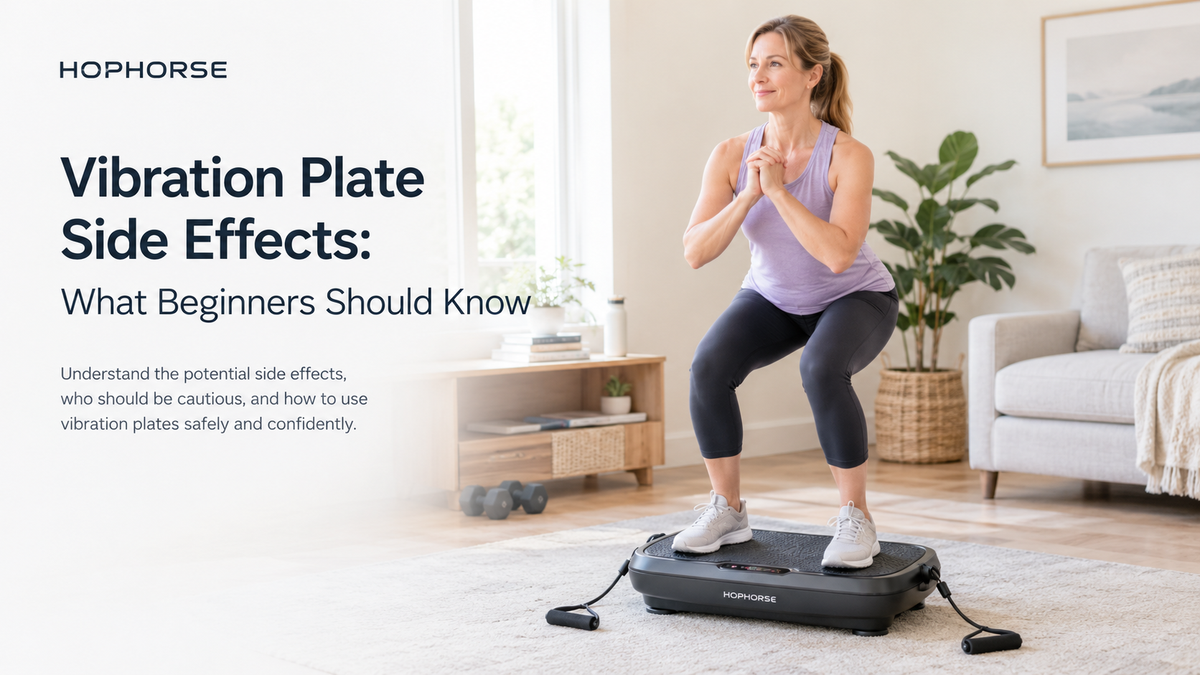
 Vibration plate side effects are worth understanding before you add whole-body vibration to your home fitness routine. Some people tolerate vibration exercise well, while others may experience discomfort, dizziness, or difficulty maintaining their balance. The level of vibration, session length, body position, and individual health conditions can all affect the experience. A vibration plate is not suitable for everyone, and using a lower setting does not automatically make it safe for every person. If you are pregnant, have a pacemaker or another implanted medical device, have a heart condition, have a history of blood clots, have severe osteoporosis, or have recently undergone surgery, consult a healthcare professional before use. For healthy beginners who have no relevant contraindications, starting conservatively and following the manufacturer's instructions is a sensible approach.
What Are the Possible Vibration Plate Side Effects?
Whole-body vibration works by transmitting repeated mechanical vibrations through the body while a person stands, sits, or performs movements on a platform. The experience can feel unfamiliar, especially during a first session. Research on whole-body vibration varies by device, intensity, exposure time, and participant characteristics, so there is no single list of effects that applies to every user.
Possible discomforts and concerns include the following:
1. Temporary muscle fatigue or soreness
Muscles respond to vibration, and some users may notice fatigue or soreness after a session. This can be more noticeable if they are new to exercise, hold a challenging position, or combine vibration with resistance exercises. Do not assume that more soreness means a better workout. Allow time to recover, and avoid repeating a session if your body has not recovered comfortably.
2. Dizziness or an uncomfortable sensation
Some people may feel dizzy, nauseated, or uncomfortable during or after vibration exercise. Balance and inner-ear concerns deserve particular attention. A published case report has described positional vertigo following whole-body vibration training, although a case report cannot establish how frequently this occurs or predict an individual's risk. Read the published case report for additional context.
3. Balance difficulties
The moving surface can make standing feel less steady. This matters for beginners, people who have a history of falls, and older adults with balance limitations. A compact machine still requires enough surrounding space to step on and off safely. If you cannot maintain a stable position, do not continue the session.
4. Discomfort from excessive intensity or duration
A setting that feels comfortable to one person may feel too intense to another. Longer sessions or stronger vibration are not automatically better. Research has found substantial differences in vibration exposure among devices, which is one reason to follow the instructions for your particular model instead of assuming that all platforms operate alike. Review research on vibration exposure and device intensity.
Keep in mind: Stop if you develop dizziness, nausea, unusual pain, numbness, or other concerning symptoms. Do not try to push through discomfort or increase the setting to make a session more effective.
Who Should Be Careful With Vibration Plates?
Vibration plates are exercise devices, not a substitute for an individualized health assessment. If you have a medical condition, take medication that affects balance or blood pressure, or are recovering from an injury, ask a healthcare professional whether whole-body vibration is appropriate for you.
In particular, consult a healthcare professional before use if any of the following apply:
- Pregnancy: Do not begin vibration plate exercise during pregnancy without guidance from your pregnancy care professional.
- Pacemakers or implanted medical devices: Ask the clinician responsible for your device whether whole-body vibration is appropriate.
- Heart conditions or a history of stroke: Obtain individualized guidance before introducing this type of exercise.
- Blood clot risk or a history of blood clots: Seek medical guidance before using a vibrating platform.
- Severe osteoporosis or a recent fracture: Ask about the suitability of vibration and the movements you can safely perform.
- Recent surgery, injury, or a period of restricted activity: Wait for appropriate clearance before starting or resuming vibration exercise.
- Seizure disorders, vertigo, or significant balance problems: Discuss the risks and safer alternatives with a healthcare professional.
- Other significant health conditions: If you have a chronic condition or are unsure whether vibration is appropriate, seek advice before use.
This list is not exhaustive, and individual circumstances differ. Harvard Health also highlights the limits of current evidence and the need for caution in people with certain health concerns. Read Harvard Health's overview of vibration plates.
For seniors, age alone does not determine whether a vibration plate is appropriate. Mobility, bone health, cardiovascular status, balance, and fall history are more useful considerations. Anyone who has difficulty standing steadily should obtain professional guidance rather than using the platform unsupported.
How Beginners Can Approach Vibration Exercise More Safely
If a healthcare professional has confirmed that vibration exercise is appropriate for you, the goal is to begin with a manageable experience rather than to reach the highest speed or longest duration. Read the instructions for your exact model, including any restrictions on posture, session length, and use of resistance bands.
Step 1: Prepare a stable workout area
Place the platform on a firm, level surface in accordance with the manufacturer's instructions. Keep the area around it clear of furniture, cords, pets, and other tripping hazards. Wear suitable footwear if recommended in the manual, and make sure you can get on and off without rushing.
Step 2: Start at a low setting
Choose a low intensity that feels manageable and follow the device instructions. Adjustable speed controls can make it easier to select a setting that suits your comfort level, but a low setting is not a guarantee of safety for someone with a contraindication. Avoid jumping straight to a high setting simply because the machine offers many speed levels.
Step 3: Keep your posture comfortable
Stand with your feet positioned as directed in the manual, keep your knees comfortably soft if appropriate for your body, and avoid locking your joints. Hold a stable support if recommended and available. Do not attempt difficult balance exercises on a vibrating platform until you have received suitable guidance.
Step 4: Keep the first session brief
There is no universal session length that is safe or appropriate for every person and every machine. Follow the model's instructions and any advice from your healthcare professional. If you have been cleared to use the device, a short initial exposure may make it easier to assess your tolerance. Do not extend the session simply because you feel little exertion.
Step 5: Pay attention to how you feel
Step off carefully when the session ends. Notice whether you feel steady and comfortable, and allow yourself time to recover before deciding whether to use the machine again. If symptoms occur, stop using the device and seek medical advice as appropriate. Severe or sudden symptoms, such as chest pain, fainting, or significant shortness of breath, warrant urgent medical attention.
A beginner's reminder: You do not need to use every feature on your first day. Start with the manufacturer's recommended setup, keep the movement simple, and prioritize comfort and stability over intensity.
When Should You Stop Using a Vibration Plate?
Some unfamiliar sensations may be difficult to interpret, so use a cautious approach. Stop the platform and step off safely if you experience:
- Dizziness, vertigo, or a feeling that you may fall.
- Nausea or a headache that develops during the session.
- Unusual joint, back, or muscle pain.
- Numbness, tingling, or discomfort that does not settle promptly.
- Palpitations, unusual breathlessness, or other concerning symptoms.
Do not restart the session to see whether the symptoms return. Contact a healthcare professional if symptoms persist, recur, or concern you. Seek urgent care for severe or sudden symptoms. A vibration plate should fit into your routine without requiring you to ignore warning signs.Beginner checking a vibration plate on a level floor with clear space around the platform. Mature woman preparing to use a vibration plate near a sturdy support in a bright home workout area.
Choosing a Vibration Plate for Home Use
Once you understand the safety considerations, the next step is finding a machine that fits your space, experience, and intended use. More speed levels or a larger feature list do not necessarily make a device more suitable for a beginner. Look for clear controls, understandable instructions, a stable setup, and features you can use comfortably.

For example, the Hophorse Whole Body Vibration Plate may suit shoppers looking for an at-home platform with adjustable settings and a compact design. Review its product specifications and instructions to confirm that it meets your needs.
If you want to compare models and features, the Hophorse Pro Vibration Plate and Hophorse Pro Max Vibration Plate provide additional options to evaluate. Compare the controls, dimensions, included accessories, and instructions rather than choosing based on the highest available setting alone.
| What to compare | What to look for |
|---|---|
| Controls | Clearly labeled settings that are easy to understand and adjust. |
| Stability | A platform that can be installed and used according to the manufacturer's instructions on a suitable surface. |
| Size and storage | Dimensions that fit your available workout area and storage space. |
| Accessories | Check whether resistance bands or a remote control are included with the exact model. |
| Instructions and support | Accessible operating guidance, safety information, and customer support. |
A vibration plate can be one option for adding movement to a home routine, but it should not be treated as a replacement for walking, strength training, or other physical activity appropriate for your abilities. Evidence about the benefits of whole-body vibration remains mixed, and outcomes from one study or device cannot automatically be applied to every machine. Mayo Clinic explains what research says about whole-body vibration.
Exploring options for your home routine?
Compare sizes, controls, and features across the Hophorse vibration plate collection to find a model that fits your space and preferences.
Shop Hophorse Vibration PlatesFrequently Asked Questions
1. What are the most common vibration plate side effects?
Potential discomforts include muscle fatigue, soreness, dizziness, nausea, or difficulty maintaining balance. Individual responses vary, and research does not establish a universal side-effect profile for every device. Stop using the platform if you feel unwell or experience concerning symptoms.
2. Can a vibration plate cause dizziness?
Some people may experience dizziness or vertigo during or after vibration exercise. People with existing balance or inner-ear concerns should consult a healthcare professional before use. Stop immediately if you feel dizzy or unsteady.
3. Who should not use a vibration plate?
Suitability depends on the person and the device. People who are pregnant, have a pacemaker or another implanted medical device, have certain heart conditions or blood clot risks, have severe osteoporosis, or have recently undergone surgery should consult a healthcare professional before use. Follow any device-specific restrictions as well.
4. How long should a beginner use a vibration plate?
There is no single duration that is appropriate for everyone. Follow the manufacturer's instructions and your healthcare professional's advice. If you have been cleared to use the device, start conservatively rather than extending sessions or increasing intensity quickly.
5. Are vibration plates safe for seniors?
Some older adults may be able to use vibration exercise, but age-related changes in balance, bone health, mobility, and cardiovascular status can affect suitability. Seniors with health conditions or fall concerns should consult a healthcare professional before use and avoid unsupported positions if balance is uncertain.
6. Can I use a vibration plate every day?
Daily use is not automatically appropriate for every person or model. Follow the instructions for your specific device, account for recovery, and do not continue if you develop discomfort. Ask a healthcare professional if you have a medical condition or are unsure about the frequency of use.
7. Can a vibration plate replace regular exercise?
No. Whole-body vibration may be an additional way to incorporate movement, but it should not automatically replace walking, aerobic activity, or strength training suited to your abilities. Research has not established that vibration plates provide all the benefits of conventional exercise.
Final Thoughts
Understanding vibration plate side effects helps you make a more informed decision about adding this type of equipment to your home routine. The most important considerations are your health history, the machine's instructions, the intensity and duration of use, and how you feel during the session.
If vibration exercise is appropriate for you, start conservatively, prioritize a stable position, and stop if you experience concerning symptoms. If you have a medical condition, are pregnant, or are uncertain about your individual risks, consult a healthcare professional before use.
When you are ready to explore equipment, browse Hophorse vibration plates and compare the features that make sense for your home and fitness routine. A thoughtful, sustainable approach to movement is more useful than chasing higher settings or longer sessions.
This article is for general educational purposes only and is not medical advice. It does not establish that vibration plate exercise is safe for every individual. Always follow the manufacturer's instructions and consult a qualified healthcare professional about personal medical concerns.
Share:
Best Compact Vibration Plate for Small Spaces
Vibration Plate Before and After: What to Realistically Expect