
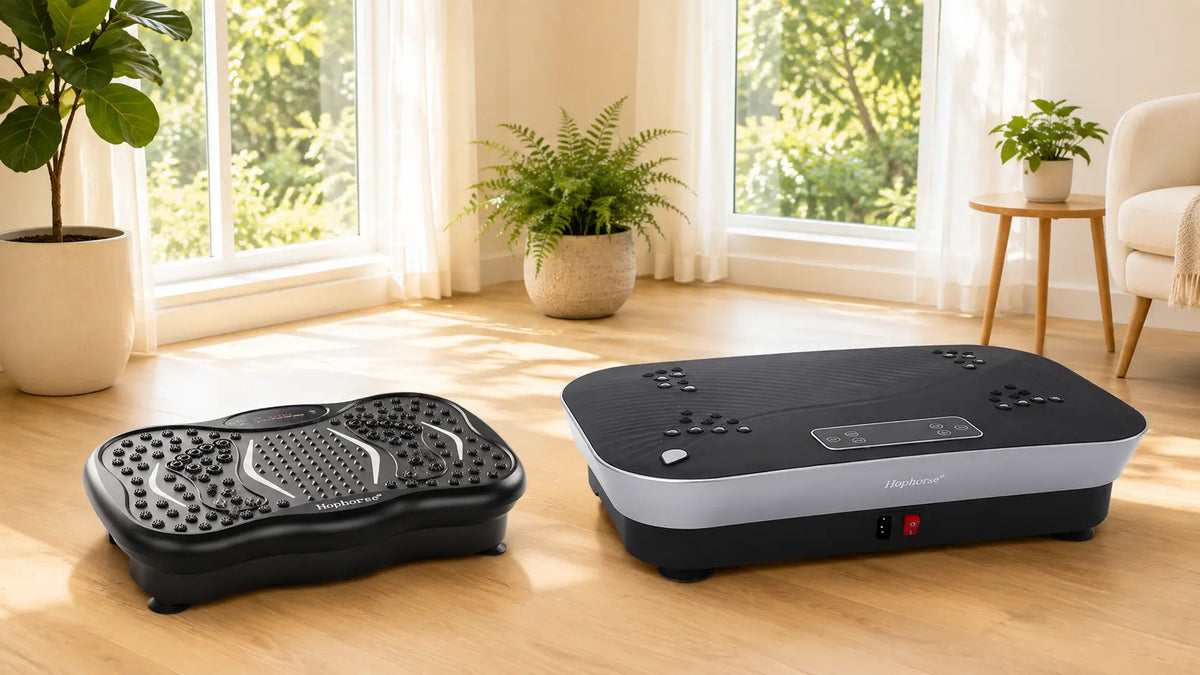

When comparing a mini vibration plate vs full size model, the practical answer is straightforward: choose a mini or compact plate if easy storage, portability and simple standing sessions matter most. Choose a larger platform if you want more room for a wider stance, squats, lunges, planks or gradual workout progression. Neither format is automatically better for every user. A compact plate may be easier to use consistently in a bedroom or apartment, while a larger home model can feel more accommodating during varied exercises. Because manufacturers do not follow one universal definition of “mini” or “full-size,” compare the actual platform dimensions, weight capacity, controls and intended use instead of relying on the product label alone.
This guide explains the differences without treating either machine as a shortcut or medical device. You can also browse all Hophorse vibration plates while comparing the features that matter for your home.
Key Takeaways
- Mini plates are generally easier to move, store and fit into small rooms.
- Larger platforms usually provide more usable space for different foot positions and exercises.
- Motor performance, platform stability and noise cannot be judged by size alone.
- Beginners should prioritize clear controls, lower starting settings and secure footing.
- The plate you can leave accessible and use consistently may be more useful than one with extra features you rarely need.
What Do Mini and Full-Size Vibration Plates Actually Mean?
A mini vibration plate is usually a low-profile platform designed for home use, limited floor space and easier storage. It commonly supports standing exercises, calf raises, shallow knee bends and resistance-band movements. Some compact models are light enough to move between rooms, although “portable” does not necessarily mean suitable for air travel.
A full-size model may refer to a wider consumer platform or a much larger commercial machine with an upright column and handrails. Those are very different categories. For most home shoppers, the useful comparison is between a compact platform and a wider, heavier platform—not between a small home plate and a commercial gym system.
| Feature | Mini or Compact Plate | Larger Home Plate |
|---|---|---|
| Best suited to | Small rooms, simple routines and frequent storage | More varied movement and a roomier standing surface |
| Storage | Usually easier to place under suitable furniture or against a wall | May need a more permanent workout location |
| Exercise space | Best for standing, calf raises, small knee bends and band work | More room for varied stance widths and floor-based positions |
| Portability | Generally easier to move between rooms | Often heavier and less convenient to reposition |
| Stability | Depends on base design, feet, surface and construction | A larger footprint may feel roomier, but construction still matters |
| Best buying priority | Easy access and routine consistency | Usable platform room and exercise flexibility |

Seven Differences That Matter in Everyday Use
1. Footprint and storage
For an apartment, bedroom or shared living room, a compact plate has an obvious advantage. It is easier to keep near the place where you will use it and less likely to take over the room. Before buying, measure both the intended workout area and the storage opening. Remember to allow space for the power cord, safe entry onto the platform and unrestricted movement around it.
2. Usable standing room
Overall dimensions do not always tell you how much room your feet will have. The control panel, curved edges and raised surface details may reduce the usable area. If you prefer a wider stance or want to change positions frequently, look closely at the standing surface rather than the widest exterior measurement.
3. Exercise variety
A mini plate works well for straightforward daily movement: relaxed standing with soft knees, calf raises, controlled knee bends and simple upper-body movements with included resistance bands. A wider plate can offer more comfortable hand placement for incline push-ups or planks and more room for split-stance exercises.

4. Stability and confidence
A heavier machine is not automatically safer, and a compact machine is not automatically unstable. Look for a textured standing surface, a well-supported base and feet designed to remain secure on a hard, level floor. The platform should stay in place during normal operation when used according to the manual.
5. Intensity and controls
Speed-level counts are difficult to compare across brands because one company’s numbered level may not equal another company’s setting. Beginners usually benefit more from gradual adjustment, a comfortable low starting level, an easy-to-read display and a remote than from chasing the highest number.
6. Noise in a real home
Size alone does not determine noise. Motor design, selected intensity, product construction and floor type all affect what you hear and what may transfer through the floor. Use a vibration plate on a hard, level surface unless the manufacturer instructs otherwise, and make sure every foot is in firm contact with the floor.
7. Portability versus permanence
A plate that must be lifted out of a closet for every session can create friction, even if it is technically portable. Think about your actual routine. A compact model may be ideal if you need to move it regularly. A wider model may be the better choice if you have a dedicated workout corner and value more standing room.

Which Vibration Plate Size Fits Your Routine?
Choose a mini or compact plate if:
- You live in an apartment or have a small workout area.
- You expect to store or move the machine regularly.
- Your routine will focus mainly on standing, calf raises, light knee bends and resistance-band movements.
- You want a simple 5–10 minute movement break before work, after sitting or while watching television.
- Convenience is more important than having the widest possible exercise surface.
Choose a larger home plate if:
- You want more room to adjust your stance.
- You plan to use squats, split positions, planks or upper-body floor exercises.
- You prefer a heavier platform that can remain in a dedicated location.
- You need a particular weight capacity or platform size confirmed by the manufacturer.
- You want more physical room to progress beyond basic standing sessions.
For older adults, the most important factors are not the words “mini” or “full-size.” Prioritize secure footing, simple controls, a comfortable stance and safe access onto the platform. A sturdy chair or fixed support can be kept nearby if balance assistance is appropriate, but users should not lean on unstable furniture.
Compare home-friendly options
Review platform designs, controls and support features across the current Hophorse range.
Compare Hophorse Vibration PlatesHow Hophorse Models Fit the Comparison
Hophorse focuses on compact, low-profile vibration plates for home routines rather than large commercial machines with upright columns. Even within this home-friendly category, platform dimensions, product weight, controls and support features vary by model.
For most beginners, the Hophorse Whole Body Vibration Plate is a practical starting point. It combines a compact home design with adjustable controls and included resistance bands for simple standing and upper-body movements.
If you want higher support and more room to progress, the Hophorse Pro Max Vibration Plate may be a better fit. Its wider platform and reinforced home-workout design suit users who place more value on standing room and exercise variety than on minimum product weight.
The Hophorse SYC Vibration Plate and Hophorse Pro Vibration Plate provide additional combinations of design, controls and home-use features. Compare the current specification section on each product page before deciding. For more small-space context, read our guide to mini vibration plate benefits.
A Simple 5–10 Minute Beginner Routine
A short routine can help you learn how the platform feels without starting at an unnecessarily high setting. Follow the instructions and session limits in your specific product manual.
- Prepare the space: Place the machine on a hard, level surface and check that the cord will not create a trip hazard.
- Step on while stopped: Position both feet securely on the textured standing area before starting the machine.
- Begin low: Select a comfortable low setting, stand upright and keep your knees softly bent rather than locked.
- Add controlled movement: If comfortable, try slow calf raises or small knee bends while maintaining steady posture.
- Use the bands carefully: Attach resistance bands only to the designated connection points and use smooth, controlled pulls.
- Finish before stepping off: Stop the platform, wait until it is still and then step onto the floor carefully.

Buying and Safety Checklist
Before placing an order, compare the details that will affect everyday use. A long feature list matters less if the platform does not fit your stance or storage space.
- Measure the available floor and storage space.
- Check the usable standing area, not only the exterior width.
- Confirm the listed maximum user weight for the exact model.
- Look for a textured surface, stable base and secure feet.
- Choose controls that are easy to read and adjust.
- Check whether a remote and resistance bands are included.
- Review the user manual, session guidance and safety warnings.
- Confirm current shipping, return, warranty and customer-support terms.

Frequently Asked Questions
Are mini vibration plates as effective as full-size vibration plates?
A mini plate can support muscle activation and consistent low-impact movement, especially for standing exercises and short home routines. A larger plate may offer more exercise room, but effectiveness also depends on construction, settings, exercise choice and consistent use.
What size vibration plate should I buy for home use?
Measure your available floor space, preferred stance and storage area. Choose a compact plate for simple routines and frequent storage, or a wider home plate if you want more space for varied foot positions and floor-based exercises.
Is a mini or full-size vibration plate better for seniors?
Neither label is automatically better. Secure footing, simple controls, comfortable platform room and safe access matter more. Consult a healthcare professional before use if you have severe osteoporosis, a heart condition, a pacemaker, blood-clot risk, recent surgery or significant balance concerns.
Can a full-size vibration plate still be quiet enough for an apartment?
Yes, depending on the motor, construction, setting and floor. Check the manufacturer’s noise information and use the plate on a hard, level surface as directed. Correct placement can also reduce unnecessary rattling and movement.
Can I do a full-body routine on a mini vibration plate?
You can combine standing positions with resistance-band movements for lower- and upper-body activity. However, a compact platform may provide less room for planks, push-ups, lunges and wide-stance exercises than a larger model.
How long should a beginner use a vibration plate?
Many beginners start with a short 5–10 minute session at a comfortable low setting. Follow the manual for your model, maintain soft knees and increase time or intensity gradually rather than changing both at once.
The Bottom Line
The mini vibration plate vs full size decision is less about finding a universally superior machine and more about removing barriers from your routine. A compact plate is often the practical choice for small spaces, simple movement and frequent storage. A wider home plate makes sense when you want more stance options, a roomier exercise surface and space to progress.
Compare actual measurements, supported user weight, stability features and controls before buying. The right plate should fit your home comfortably and make a short, repeatable movement routine easier to return to.
Find the format that fits your home
Explore the current Hophorse collection and compare each model’s platform, controls and included accessories.
Shop Hophorse Vibration Plates
Share:
Hophorse vs LifePro Vibration Plate
Does a Vibration Plate Count as Steps?