
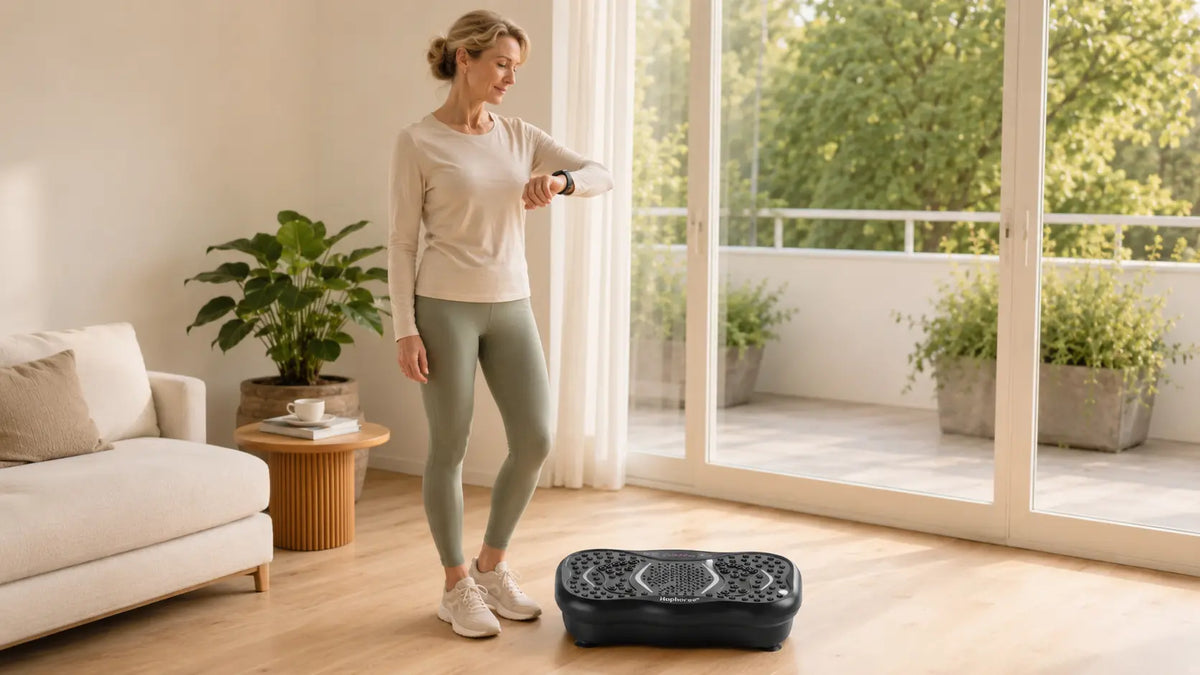
Usually, no—a vibration plate does not count as actual steps unless you are truly stepping. A watch or phone may sometimes add steps while the platform is running because its motion sensors mistake vibration or arm movement for a walking pattern. Those numbers are device estimates, not proof that you covered walking distance. A vibration plate can still support a useful low-impact home routine by adding muscle engagement, controlled exercises, and a movement break after long periods of sitting. The most accurate approach is to keep two records: let your tracker count real walking steps, and log vibration plate work separately by time, exercises, and effort. That gives you a clearer picture of what you actually did—without dismissing a short session that helped you move more consistently.
Does a vibration plate count as steps? The short answer
A step is normally counted when a phone or wearable recognizes a motion pattern that resembles walking or running. In ordinary use, that pattern comes from repeated footfalls, changes in body position, and—on a wrist-worn device—arm movement. Standing in one place on a vibration plate does not create the same physical action or forward distance.
If your watch shows an extra 200, 500, or even more steps during a session, view that number cautiously. It may reflect vibration transferred to your wrist, repeated band pulls, or small body adjustments. The device cannot always tell the difference between a real stride and another rhythmic motion.
Simple rule
If you did not repeatedly lift and place your feet in a walking pattern, do not consider the tracker increase verified walking steps.

Why Apple Watch, Fitbit, or other trackers may show steps
Consumer trackers estimate movement with sensors and algorithms. Garmin explains that its wearables capture arm movement with an internal three-axis accelerometer when tracking steps. Apple says the Health app automatically counts steps and walking or running distance when the relevant device is carried or worn. Unusual repetitive movement can sometimes be misclassified.
Results can vary with device placement, fit, resistance-band use, and platform setting. A phone resting on a table may show no change while a watch on an actively moving wrist adds steps. Different trackers may filter the same session differently.
| Activity | Are these actual steps? | Best way to track it |
|---|---|---|
| Standing with soft knees | No | Session time and comfort level |
| Mini squats or calf raises | No | Repetitions, sets, and time |
| Resistance-band pulls | No, even if a watch adds steps | Repetitions and session time |
| Walking around the room afterward | Yes | Normal step count and distance |
What does a vibration plate session count toward?
A plate session can count as intentional movement in your routine. Your muscles respond as you maintain posture or perform controlled exercises, but that does not mean the session equals a certain number of steps, miles, or minutes of brisk walking.
For practical tracking, a session can contribute to goals such as:
- taking a movement break after sitting at a desk;
- completing a short, repeatable home-fitness routine;
- practicing controlled squats, calf raises, or band movements; and
- building consistency when a longer routine feels unrealistic.
Public guidelines focus on aerobic intensity and muscle-strengthening activity, not one step target. The CDC recommends weekly aerobic activity plus muscle-strengthening days and notes that some activity is better than none. A plate session's intensity depends on the exercises, pace, and individual—not vibration alone.

Is 10 minutes on a vibration plate equal to a certain number of steps?
No reliable, universal conversion exists. Claims such as “10 minutes equals 5,000 steps” ignore differences in settings, exercises, body position, individual response, and wearable algorithms. They compare distinct activities as if they were interchangeable.
If your goal is 7,000 or 10,000 actual daily steps, count the steps you take while walking. If your goal is to move more consistently, record your plate session alongside those steps. Both numbers can be useful without forcing one into the other.
A practical 10-minute vibration plate routine
Use the plate on a hard, level surface and follow its manual. Start at a lower setting, keep the knees soft, and prioritize control over intensity.
- Minutes 0–2: Comfortable standingStand with both feet secure on the textured area. Keep your posture tall and your knees slightly bent.
- Minutes 2–4: Small knee bendsUse a shallow, comfortable range. Move slowly and stop if you feel unsteady.
- Minutes 4–6: Resistance-band pullsUse only the designated attachment points and keep the movement controlled.
- Minutes 6–8: Calf raisesLift and lower the heels slowly while maintaining balance. Skip this step if it does not feel secure.
- Minutes 8–10: Easy standing finishReturn to a stable stance, breathe normally, and step off only after the platform stops.
Want more actual steps? Add a five- or ten-minute walk before or after the session. Walking contributes genuine steps and distance; the plate adds a compact movement block.

How to track a vibration plate workout accurately
Note your step total before and after a session. If it rises while you remain in place, your device is sensitive to this motion. Avoid treating that increase as a precise walking total.
Then record the measures that match the work:
- Duration: how many minutes you used the plate;
- Mode or setting: enough detail to repeat a comfortable session;
- Exercises: standing, mini squats, calf raises, stretches, or band pulls;
- Volume: sets or repetitions for active movements; and
- Perceived effort: easy, moderate, or challenging.
If your wearable offers a general workout or “Other” mode, use it to time the session. View calorie and heart-rate readings as estimates, focus on trends, and keep walking steps separate.
Choosing a vibration plate for a daily home routine
Look for a stable, textured platform, clear controls, adjustable settings, and a footprint that fits your space. Quiet operation and simple storage can support consistency.
For most beginners, the Hophorse Whole Body Vibration Plate is a practical starting point with 180 speed levels, included resistance bands, and a compact home-friendly design. If you want a wider platform, 460-pound listed capacity, and more room to progress, the Hophorse Pro Max Vibration Plate may be a better fit; it offers 200 speed levels.
You can also compare the Hophorse SYC Vibration Plate and Hophorse Pro Vibration Plate, or read about mini vibration plate benefits for small spaces before deciding.

Compare the models at your own pace
Review platform size, controls, speed range, included accessories, and listed capacity across the current Hophorse lineup.
Compare Hophorse Models
The bottom line
A vibration plate session may appear in your step count, but standing vibration is not the same as walking. Skip the unsupported conversions and track what actually happened: walking steps for walking, and minutes plus movements for your vibration plate routine.
That distinction does not make the plate session meaningless. A short, beginner-friendly routine can support daily movement, break up sitting time, and make an active habit easier to repeat at home. Pair it with regular walking and other suitable activity for a more complete routine.
Find a plate that fits your space
Explore compact, adjustable options designed for simple home movement routines.
Shop Hophorse Vibration PlatesFrequently asked questions
Does a vibration plate count as steps on Apple Watch?
Apple Watch may add steps during a vibration plate session if the vibration or your arm movements resemble its expected walking pattern. Those readings are not necessarily actual steps. Check your total before and after the session, and record the plate workout separately by time and exercises.
Does a vibration plate count toward 10,000 steps?
Not as a direct substitute. Count actual walking or running steps toward a step goal. You can record a vibration plate session as additional movement, but there is no standard step credit for standing on the platform.
How many steps is 10 minutes on a vibration plate?
There is no evidence-based universal conversion. The session varies with the setting, position, exercises, and individual, while step trackers also use different algorithms. Log the 10 minutes as a vibration plate session rather than assigning an estimated number of steps.
Should I track a vibration plate session as a workout?
You can use a general workout or “Other” mode if your device offers one, especially when you perform controlled exercises. Use it mainly to record duration and trends. Keep wearable calorie, heart-rate, and step readings in perspective because they are estimates.
Can a vibration plate replace walking?
No. Vibration training and walking create different movement demands. A plate can complement walking by adding a compact low-impact routine, but it does not reproduce walking distance or serve as a step-for-step replacement.
Can seniors use a vibration plate to move more at home?
Some older adults may find a short, low-setting session approachable, but individual health and balance needs matter. Seniors with severe osteoporosis, heart conditions, blood-clot risk, a pacemaker, recent surgery, or other medical concerns should consult a healthcare professional before use.
Share:
Mini Vibration Plate vs Full-Size Vibration Plate
Vibration Plate Speed Levels Chart for Beginners