
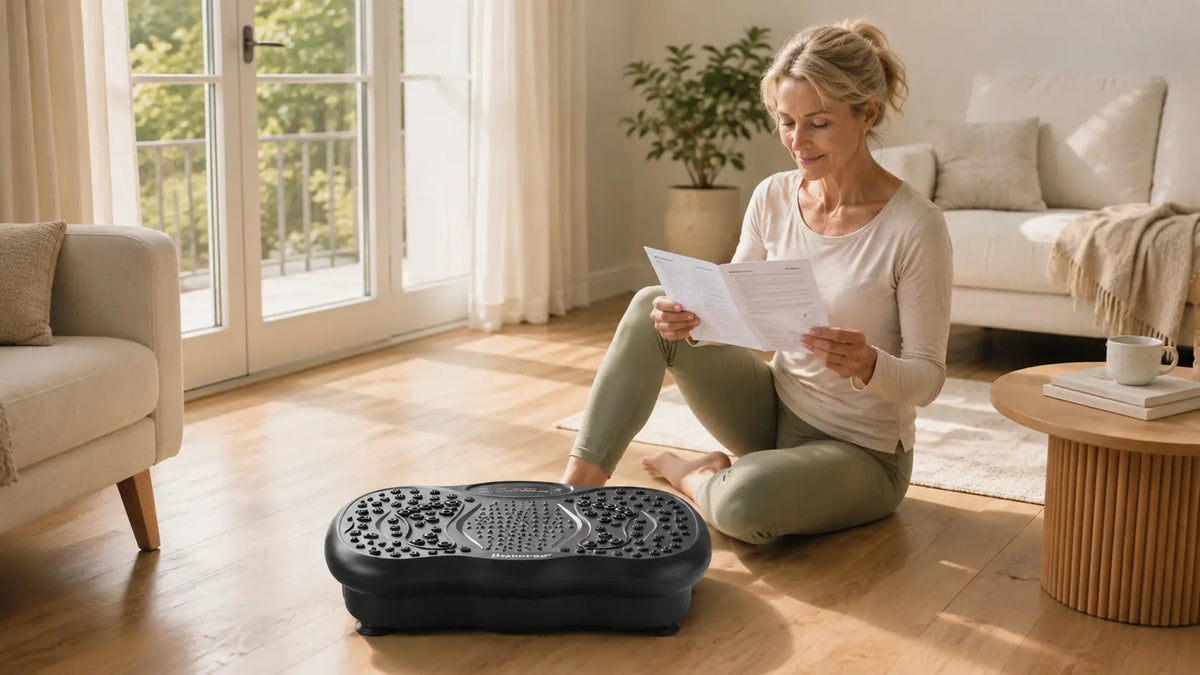
Most healthy adults can use a vibration plate, but some people should avoid it until a healthcare professional reviews their situation. That includes anyone who is pregnant, has an implanted medical device, is recovering from recent surgery or a fracture, has an active blood clot, has an unstable heart or circulation condition, or has severe osteoporosis with high fracture risk. This is not always a permanent “no.” It often means pausing, getting individualized clearance, and following limits set by a clinician who knows your history. Age alone is not a reason to rule out vibration training, but balance, bone health, medications, and chronic conditions matter.
Important: This article provides general fitness safety information, not medical advice. Do not use a vibration plate to diagnose or manage a health condition. Consult a qualified healthcare professional before use when you are pregnant, have a pacemaker or other implanted device, recently had surgery, have a heart condition, have a current or previous blood clot, or have severe osteoporosis.

Key takeaways
- Pause while a major medical issue, injury, pregnancy, or post-surgical restriction is unresolved.
- Get clearance for implanted devices, clotting concerns, unstable cardiovascular conditions, or high fracture risk.
- Age over 65 does not automatically make use unsafe.
- Once cleared, begin on a stable surface with low intensity and short sessions.
- Stop for chest pain, faintness, unusual breathlessness, sharp pain, numbness, or loss of balance.
Who Should Avoid a Vibration Plate Until Cleared?
Vibration plates create rapid movement under the feet, and the body responds by activating muscles to maintain stability. For some medical situations, that added movement, balance demand, or load may be inappropriate until a clinician confirms it is safe.
| Situation | Recommended next step | Why individual guidance matters |
|---|---|---|
| Pregnancy | Ask your obstetric healthcare professional before use. | Recommendations vary with pregnancy stage, symptoms, and obstetric history. |
| Pacemaker or implanted medical device | Get explicit clearance from the clinician who manages the device. | Device type, placement, and manufacturer instructions vary. |
| Recent surgery, joint replacement, fracture, or unhealed wound | Wait until your surgeon or rehabilitation professional approves the activity. | Healing and movement restrictions are procedure-specific. |
| Active DVT, pulmonary embolism, or unresolved clotting concern | Do not use the plate; seek medical guidance. | Blood clots require professional diagnosis and management. |
| Unstable heart condition, recent cardiac event, or uncontrolled blood pressure | Discuss exercise safety and intensity with your healthcare team first. | A clinician may set limits or recommend supervision. |
| Severe osteoporosis, recent compression fracture, or very high fall risk | Use only with professional clearance and an appropriate support plan. | Key concerns are fracture risk, posture, and stability. |
Pregnancy
Regular activity is appropriate for many uncomplicated pregnancies, but every type of equipment is different. Guidance specific to consumer vibration plates is limited. Do not start or continue using one during pregnancy unless your obstetric healthcare professional has specifically cleared it.
Pacemakers and Other Implanted Devices
If you have a pacemaker, defibrillator, neurostimulator, insulin pump, cochlear implant, or another implanted device, do not assume general exercise clearance covers vibration equipment. Ask the specialist managing the device and check its manufacturer instructions before use.

Recent Surgery, Joint Replacement, Fracture, or Unhealed Injury
Return-to-exercise timing depends on the procedure, healing progress, weight-bearing status, and rehabilitation plan. Wait until your surgeon, physical therapist, or treating professional confirms that vibration and standing balance work are appropriate.
Active Blood Clots or Significant Clotting Concerns
Do not use a vibration plate with an active deep vein thrombosis, pulmonary embolism, or possible clot symptoms. New one-sided swelling, warmth, redness, or tenderness needs medical assessment. Chest pain, difficulty breathing, fainting, or coughing up blood requires urgent care.
Unstable Cardiovascular Conditions
Ask for clearance if you recently had a heart attack or stroke, have unexplained chest pain, uncontrolled high blood pressure, significant rhythm problems, or instructions to limit exercise. Your clinician may recommend supervised activity or a different starting point.
Severe Osteoporosis or High Fracture Risk
Osteoporosis is not automatically a lifetime ban. The key issues are recent fractures, vulnerable areas such as the spine or hips, safe standing, and fall risk. Severe osteoporosis, vertebral compression fractures, or frequent falls require professional guidance before use.
Other reasons to pause and ask first:
- Unexplained dizziness, vertigo, fainting, or significant balance problems
- Acute illness, fever, severe fatigue, or a new neurological symptom
- Severe joint pain, a fresh sprain, or an injury that changes how you stand
- A medication change that affects blood pressure, alertness, balance, or bleeding risk
- Any instruction from your clinician to avoid weight-bearing activity or mechanical vibration
Why Age Alone Is Not the Deciding Factor
There is no single age cutoff. A healthy 70-year-old with good balance may be a more appropriate candidate than a younger adult recovering from surgery or managing an unstable condition.
For older adults, focus on fall risk, bone health, foot sensation, medications, and the ability to step on and off safely. A sturdy chair or countertop can provide light balance support, but it does not replace medical clearance.

Once cleared, use short sessions, lower settings, soft knees, and simple positions. The goal is to learn how your body responds—not to chase maximum intensity.
Compare home-friendly vibration plates
Review platform size, controls, speed options, included resistance bands, and support capacity before choosing a model for your routine.
Compare Hophorse Vibration PlatesA Practical Pre-Use Safety Checklist
After clearance, check both the environment and your starting plan. This matters for beginners, people returning after a long break, and older users.
- Read the manual. Use the product only as directed, including placement, session limits, and resistance-band attachment points.
- Choose a hard, level surface. Avoid thick carpet or an unstable floor that could allow the platform to shift.
- Clear the area. Keep cords, rugs, pets, and furniture out of your stepping path.
- Start low. Select a comfortable beginner setting rather than testing the highest level.
- Keep your knees soft. Avoid locking the joints while standing on the moving platform.
- Use short sessions. Begin with a few minutes and increase only when the experience feels stable and comfortable.
- Add one change at a time. Increase either duration, speed, or exercise complexity—not all three together.
- Keep support nearby when needed. Use a stable chair or countertop for light balance assistance, not a rolling chair.

For a simple setup sequence, read how to use a vibration plate. It covers placement, stance, gentle movement, and gradual progress.
Warning Signs That Mean You Should Stop
Stop the machine and step off carefully if you feel unwell or unstable. Do not try to “push through” a symptom just because the session is short or the setting is low.
- Chest pain, pressure, or unusual shortness of breath
- Faintness, severe dizziness, confusion, or loss of balance
- Sharp or worsening pain in a joint, bone, back, or surgical area
- New numbness, weakness, tingling, or changes in vision
- One-sided swelling, warmth, redness, or tenderness in a limb
- Palpitations or a heart rate response that feels unusual for you
- Any symptom your healthcare professional told you to monitor
An unfamiliar sensation is different from significant dizziness, pain, breathing difficulty, or neurological symptoms. When in doubt, stop and seek medical advice before trying again.

Choosing a Vibration Plate After Clearance
After clearance, compare stability, usable platform space, clear controls, and a range that lets you start gently. Compact size and quiet operation also help a home routine feel practical.
| Option | May suit | What to compare |
|---|---|---|
| Hophorse Whole Body Vibration Plate | Most beginners and everyday home users | Simple controls, compact design, adjustable levels, and included resistance bands |
| Hophorse SYC Vibration Plate | Users comparing another compact home-friendly format | Platform feel, controls, available settings, and fit within the room |
| Hophorse Pro Max Vibration Plate | Users who want higher support and more room to progress | Support capacity, platform stability, speed range, and exercise space |
| Hophorse Pro Vibration Plate | Users comparing a compact model with broad speed control | Dimensions, control layout, resistance bands, and preferred intensity range |

For most beginners, the Hophorse Whole Body Vibration Plate is a practical starting point. If you want higher support and more room to progress, the Hophorse Pro Max Vibration Plate may be a better fit. You can compare all Hophorse vibration plates before deciding.
A vibration plate should support, not replace, walking, strength training, balance work, or medical rehabilitation. Follow your health status and professional restrictions.
Frequently Asked Questions
Can seniors use a vibration plate?
Many seniors may be able to use a vibration plate. Safety depends more on balance, bone health, medications, heart conditions, foot sensation, and fall risk than age alone. Significant medical conditions require professional clearance.
Can you use a vibration plate with a pacemaker?
Do not use one with a pacemaker or other implanted device unless the clinician managing it gives explicit clearance. Device type, placement, history, and manufacturer instructions affect the recommendation.
Can you use a vibration plate while pregnant?
Do not start or continue use during pregnancy without specific approval from your obstetric healthcare professional. General exercise guidance does not automatically cover vibration equipment.
Is a vibration plate safe with osteoporosis?
Osteoporosis is not always an absolute restriction, but severe osteoporosis, a recent fracture, vertebral compression fractures, or high fall risk require professional guidance.
How long should a beginner use a vibration plate?
After clearance, begin with a few minutes at a low setting. Increase gradually according to the manual, and stop if you feel dizzy, unstable, or unwell.
What symptoms mean I should stop using a vibration plate?
Stop for chest pain, faintness, unusual breathlessness, sharp or worsening pain, new numbness or weakness, loss of balance, or one-sided limb swelling and warmth. Seek urgent care for severe or sudden symptoms.
Find a model that fits your home routine
Compare compact designs, beginner-friendly controls, adjustable settings, platform support, and included accessories.
Shop Hophorse Vibration PlatesSafety References
These sources provide general context. Individual guidance should come from your healthcare professional.
Share:
Vibration Plate with Resistance Bands: Is It Worth It?
Hophorse vs LifePro Vibration Plate