
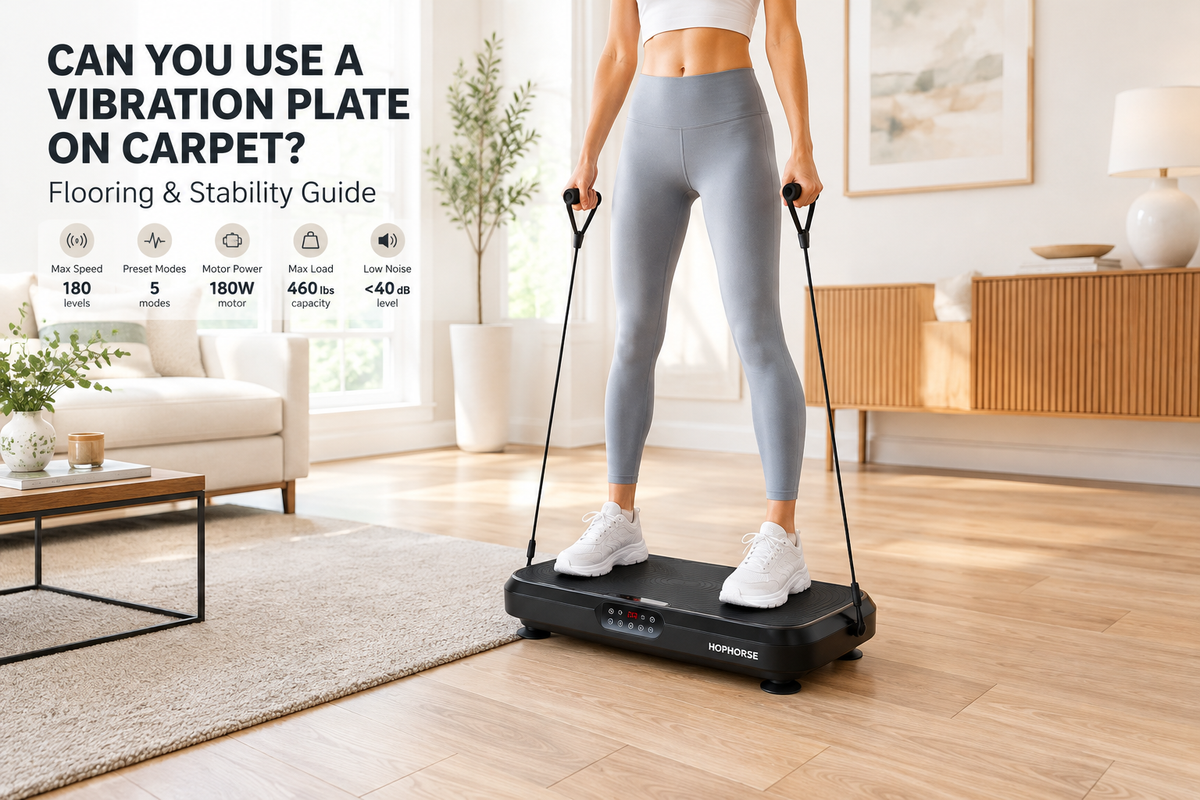
Yes, you may be able to use a vibration plate on carpet, but the type of carpet and the stability of the machine matter. A firm, low-pile carpet over a solid floor may provide a suitable surface if the vibration plate remains level and all of its support points make secure contact. However, thick, plush, or heavily cushioned carpet can make the platform less stable. Before starting a session, check your machine's user manual, inspect the flooring, and make sure the plate does not rock, tilt, or shift. A hard, level floor is generally the more predictable starting point. This guide explains how different flooring types affect vibration plate placement and what to check before using one at home.
 A level, stable workout area is an important part of setting up a vibration plate at home.
Can You Use a Vibration Plate on Carpet?
In some situations, yes. The important consideration is not simply whether the floor is carpeted, but whether the machine has a firm, level, and consistent base underneath it.
Vibration plates create repeated movement through their platforms. When the machine sits on an uneven or soft surface, the material underneath may compress differently from one side to another. This can affect how securely the machine sits and may allow it to move during operation.
A low-pile carpet installed over a solid subfloor is generally easier to assess than a thick, cushioned carpet with a soft underlay. Even so, carpet construction varies, so there is no universal rule that every vibration plate can be used on every carpet.
Another detail worth checking is the design of the machine's base. Some models use rubber feet, while others have suction cups or other contact points. Suction cups may not grip carpet in the same way they grip a smooth, hard floor. Do not assume that a machine will have the same stability on carpet as it does on tile or wood.
Does Carpet Thickness Matter?
Yes. Carpet thickness, softness, and the padding underneath can all influence how a vibration plate sits. Here is a practical way to think about common carpet types.
 Carpet construction and cushioning can change how firmly a vibration plate sits on the floor.
1. Low-Pile Carpet
Low-pile carpet has shorter fibers and generally provides a firmer surface than plush carpet. It may be suitable for certain vibration plates if the floor underneath is solid and the machine remains completely level.
Before using the machine, check that all support points are resting evenly. Test for rocking or shifting while the machine is switched off, then follow the manufacturer's instructions for operation.
2. Medium-Pile Carpet
Medium-pile carpet offers more cushioning and may compress under the weight of the equipment and the person using it. Whether it is appropriate depends on how much the carpet gives and how the vibration plate is designed.
Pay particular attention to the edges of the platform. If one side sinks more than another, the machine may not be sitting evenly. Choose another location if you cannot establish a stable base.
3. Thick or Plush Carpet
Thick, fluffy carpet and heavily padded flooring are generally less suitable for vibration plate placement. The soft material can compress unevenly, making it harder to maintain consistent contact between the machine and the floor.
Avoid using a vibration plate on deep-pile rugs, loose rugs, thick carpet pads, or other soft surfaces unless the manufacturer specifically confirms that the setup is suitable.
Which Flooring Is Best for a Vibration Plate?
If you have several places to choose from at home, a hard, flat floor is usually the easiest surface on which to establish a stable setup. However, different flooring materials have their own practical considerations.
 A dedicated, level area makes it easier to check your equipment before each session.
| Floor Type | General Suitability | What to Check |
|---|---|---|
| Hardwood | Generally suitable | Use a level area and check the floor's finish for possible scratches. |
| Tile | Generally suitable | Check for uneven grout lines, loose tiles, and secure contact. |
| Vinyl or laminate | Generally suitable | Make sure the floor is level and protected from unwanted movement or marks. |
| Low-pile carpet | Model-dependent | Check compression, level positioning, and base contact. |
| Thick or plush carpet | Generally not recommended | Soft padding may make the platform unstable. |
| Loose area rug | Not recommended | The rug may shift or bunch during operation. |
Keep in mind that this is general flooring guidance, not a replacement for the instructions supplied with your machine. A floor that looks flat may still have uneven areas or a surface finish that needs protection.
What About Using a Mat Under a Vibration Plate?
A suitable floor-protection mat may help protect certain hard surfaces from scratches and contact marks. However, adding a mat does not automatically make an unsuitable floor safe for use.
If you are considering a mat, choose one that is firm, thin, level, and non-slip, and make sure your machine's manufacturer allows it. Avoid thick foam exercise mats, soft yoga mats, folded towels, and materials that can compress or slide under vibration.
Also consider the machine's base design. A mat may interfere with suction cups or other features intended to make contact with the floor. The mat and machine should work together without rocking, sliding, or losing stable contact.
How to Improve Vibration Plate Stability on Carpet
If your machine's instructions permit use on carpet, take a few minutes to check the setup before starting your workout. These simple checks can help you identify an unsuitable location.
 Inspecting the base and support points helps you spot an uneven setup before switching on the machine.
- Choose a firm area. Avoid carpet with deep cushioning, uneven patches, or a loose rug underneath.
- Check the floor beneath the carpet. A solid, level subfloor is preferable to a surface with dips or soft spots.
- Inspect the machine's base. Make sure all feet or designated support points sit evenly. Check that no part of the base is lifted.
- Check for rocking. With the machine switched off, gently assess whether it moves or tilts. Do not operate it if it feels unstable.
- Keep the surrounding area clear. Leave enough room to step on and off comfortably without bumping into furniture.
- Recheck the setup regularly. Carpet can compress over time, so inspect the position again if the machine is moved or the flooring changes.
Looking for a vibration plate for your home routine?
Explore the Hophorse collection to compare compact designs, adjustable settings, and different platform styles.
Explore Hophorse Vibration PlatesHow to Set Up Your Vibration Plate at Home
Once you have chosen an appropriate floor, the next step is to prepare a comfortable workout area. You do not need a dedicated home gym. A small, organized space in your living room, bedroom, or home workout corner can be enough.
 A simple home workout corner can make daily movement easier to fit into a busy schedule.
Step 1: Read Your User Manual
Start by checking the manufacturer's instructions for floor requirements, power connection, weight capacity, and recommended operation. Different vibration plates can have different base designs and operating requirements.
Step 2: Position the Machine
Place the plate on an approved, level surface. Make sure the power cord is not stretched across a walking path and that the machine is away from furniture, walls, and other obstacles.
Step 3: Check the Platform
Confirm that the machine is not rocking or shifting. Look at the base, inspect the surrounding floor, and make sure the platform is positioned as recommended by the manufacturer.
Step 4: Start With a Comfortable Setting
If you are new to vibration plate workouts, begin with a low setting and a short session. Stand in a comfortable position, follow the user manual, and avoid increasing intensity too quickly.
Step 5: Put the Machine Away Safely
When your session is complete, switch off the machine and follow the instructions for unplugging and storing it. Keep the area clean and dry, and avoid dragging the plate across delicate flooring.
For more beginner guidance, read our related article: how to use a vibration plate.
Vibration Plate Safety Considerations
Choosing the right floor is only one part of a comfortable home workout. Your equipment, surroundings, and personal circumstances also matter.
 Start with a comfortable setup, an appropriate intensity, and enough space around the equipment.
- Wear suitable footwear or follow your manual's guidance: Use the type of footwear or bare-foot positioning recommended for your particular model.
- Keep your balance: Step onto and off the platform carefully. If needed, position the machine near a stable support without interfering with its operation.
- Avoid excessive intensity: Start at a comfortable level and follow the recommended session duration in your user manual.
- Keep the floor dry: Moisture, loose rugs, and clutter can increase the chance of slipping.
- Inspect the equipment: Check the power cord, platform, base, and other components for visible damage before use.
- Stop if something feels wrong: If the machine makes an unusual noise, shifts position, or behaves unexpectedly, switch it off and check the instructions before using it again.
A vibration plate is a fitness device, not a medical treatment or a substitute for individualized medical advice. Choosing a stable floor does not remove other personal or equipment-related risks.
Choosing a Vibration Plate for Home Use
Flooring is important, but it is also worth considering the design of the vibration plate itself. A compact platform, easy-to-use controls, and adjustable settings can make it easier to incorporate low-impact movement into everyday life.
When comparing models, look beyond appearance and consider the platform dimensions, base construction, weight capacity, operating instructions, and the type of flooring recommended by the manufacturer.
Hophorse Whole Body Vibration Plate
For most beginners, the Hophorse Whole Body Vibration Plate is a practical starting point. It features 180 adjustable speed levels, five preset modes, a compact platform, a remote control, and two resistance bands. Its space-conscious design makes it a convenient option for a home workout area.
The model also features a base with suction cups. Keep in mind that suction cups are designed for appropriate contact with a compatible surface, so carpet may affect how they make contact. Check the user manual for the approved flooring before placing the machine on carpet.
Hophorse Pro Max Vibration Plate
If you want a wider platform and a higher stated weight capacity, the Hophorse Pro Max Vibration Plate may be worth comparing. It features a 22.9 × 14-inch platform, 200 adjustable speed levels, five preset modes, and a stated maximum user weight capacity of 460 lb.
Its wider platform and reinforced base are useful product features to consider when comparing equipment. However, platform size and weight capacity do not determine whether a machine is suitable for thick carpet. Always follow the model-specific floor requirements.
You can also compare the Hophorse Vibration Plate SYC if you prefer another compact home fitness design.
The right choice is the one that fits your available space, preferred routine, and the manufacturer's setup requirements. No matter which model you choose, a stable installation surface should come first.
Frequently Asked Questions
1. Can you put a vibration plate directly on carpet?
It depends on the vibration plate and carpet. Some machines may be suitable for firm, low-pile carpet, while others require a hard, level surface. Check the user manual and make sure the machine sits evenly without rocking or shifting.
2. Can you use a vibration plate on thick carpet?
Thick or plush carpet is generally not recommended because its cushioning may compress unevenly and affect platform stability. Choose a firm, approved surface instead, unless the manufacturer specifically permits your carpet type.
3. What is the best surface for a vibration plate?
A hard, flat, level floor is generally the most predictable option. Hardwood, tile, and suitable laminate or vinyl floors may work when the machine's base makes secure contact and the surface meets the manufacturer's requirements.
4. Can a vibration plate damage carpet?
Repeated pressure and movement may leave impressions or affect carpet fibers, depending on the machine's weight, base design, and flooring material. Check the carpet after use and follow the manufacturer's floor-protection recommendations.
5. Should I put an exercise mat under my vibration plate?
Not necessarily. A thick or soft exercise mat can compress or move during operation. If you need floor protection, use only a firm, level, non-slip mat that the manufacturer approves and that does not interfere with the machine's base.
6. Can I use a vibration plate on hardwood floors?
Generally, yes, if the hardwood floor is level, structurally sound, and suitable for your machine. Consider an approved protective mat if necessary, and make sure the machine does not slide or damage the floor's finish.
7. Why does my vibration plate move on the floor?
Movement can result from an uneven surface, soft flooring, improper positioning, or a problem with the machine's base. Switch it off, inspect the support points, and reposition it on a suitable surface. If movement continues, stop using it and contact the manufacturer.
8. Can seniors use a vibration plate at home?
Some older adults may incorporate vibration plate exercise into a home fitness routine, but suitability depends on individual circumstances. Seniors should consult a healthcare professional before use, follow the manufacturer's safety guidance, and begin only with an appropriate setup and level of support.
Make room for everyday movement.
A comfortable home workout starts with equipment that fits your space and a setup that follows the manufacturer's instructions.
Shop Hophorse Vibration PlatesFinal Thoughts
So, can you use a vibration plate on carpet? Sometimes, but carpet type, base design, and machine instructions all matter. Firm, low-pile carpet may be suitable for certain models, while thick, plush, or loose flooring can make the platform unstable.
Before every session, take a moment to check the floor, inspect the machine's base, and make sure the platform sits securely. When possible, choose a firm, level surface that is approved by the manufacturer.
With a suitable setup and a comfortable routine, a vibration plate can be a convenient addition to your home fitness space. Start at your own pace, keep safety in mind, and make daily movement a habit that works with your lifestyle.
Share:
Vibration Plate Frequency vs Speed Levels: Hz Explained
Vibration Plate vs Mini Stepper: Which Fits Your Routine?