
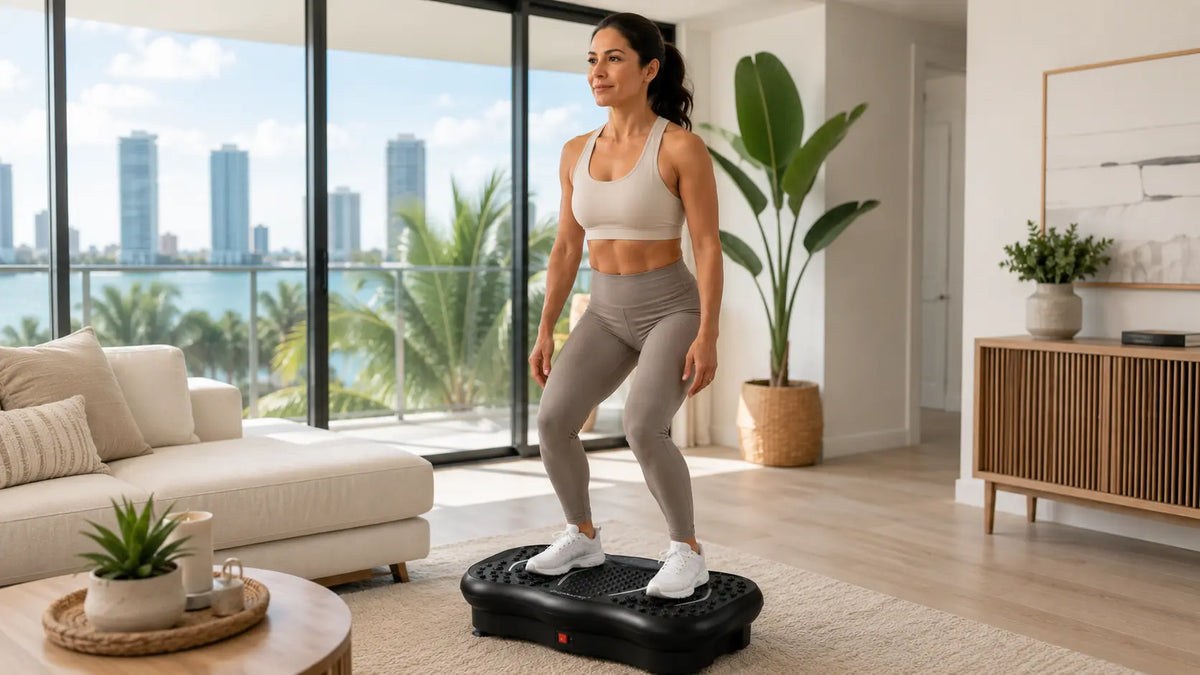
A vibration plate can be a simple way to add more movement to your day, but knowing which exercises to do can make your first few sessions much easier. This vibration plate exercise chart gives beginners 10 simple movements that can be performed at home, from basic standing and gentle knee bends to calf raises and light resistance-band work. The goal is not to make every session intense. Instead, focus on stable footing, controlled movement, comfortable settings, and a routine you can realistically repeat. For many people, starting with just 5–10 minutes is enough to become familiar with the platform and build a consistent home fitness habit.
 A simple vibration plate routine can fit naturally into an everyday home workout.
- Start with simple, controlled movements before trying more advanced exercises.
- Keep your knees slightly soft rather than locked while standing.
- Use a comfortable lower setting when learning a new exercise.
- Begin with short sessions and increase gradually as you become more familiar with the machine.
- Use the vibration plate as part of a broader active lifestyle rather than as a replacement for walking, strength training, or other exercise.
Vibration Plate Exercise Chart for Beginners
The chart below is designed as a practical starting point rather than a strict workout prescription. Your ideal speed, duration, and exercise selection can vary depending on your experience, balance, comfort, and the specific vibration plate you use.
| Exercise | Suggested Time | Main Focus | Beginner Tip |
|---|---|---|---|
| 1. Basic Standing | 1–2 min | Balance & body awareness | Keep knees slightly soft. |
| 2. Soft Knee Bends | 30–60 sec | Lower-body movement | Use a small, controlled range. |
| 3. Mini Squats | 30–60 sec | Legs & glutes | Stay shallow and controlled. |
| 4. Calf Raises | 30–60 sec | Lower legs & balance | Use support if needed. |
| 5. Heel-to-Toe Shifts | 30–60 sec | Balance & foot movement | Move slowly without rocking. |
| 6. Side-to-Side Weight Shifts | 30–60 sec | Coordination & stability | Keep both feet secure. |
| 7. Standing March | 30–60 sec | Light full-body movement | Lift each foot only as high as feels stable. |
| 8. Resistance-Band Curls | 30–60 sec | Upper-body movement | Use slow, controlled repetitions. |
| 9. Resistance-Band Rows | 30–60 sec | Upper back & arms | Keep shoulders relaxed. |
| 10. Seated Foot Taps | 1–2 min | Gentle lower-body movement | Use a stable chair and comfortable setting. |
If you are completely new to vibration training, it can help to read our guide on how to use a vibration plate before trying the full chart.
10 Beginner Vibration Plate Exercises
You do not need to perform all 10 exercises in one session. Start with three or four movements that feel comfortable, then gradually add variety. The exercises below are arranged from simpler movements toward slightly more active options.
1. Basic Standing
Start with the simplest position. Stand near the center of the platform with your feet about hip-width apart. Keep your shoulders relaxed and your knees slightly bent rather than locked. Let your arms rest naturally by your sides.
Use this position to become familiar with the vibration before adding movement. If you feel unsteady, place the machine near a stable countertop or another secure surface that you can use for light support.
2. Soft Knee Bends
From the basic standing position, slowly bend your knees a little and return to standing. Think of this as a small controlled movement rather than a full squat.
Keep your chest comfortably lifted and avoid bouncing. Small movements are enough when you are learning how the platform feels under your feet.
3. Mini Squats
Once soft knee bends feel comfortable, try a shallow squat. Place your feet in a comfortable stance, push your hips slightly back, and lower only as far as you can maintain good control.
Keep the movement slow and avoid chasing depth. A smaller range of motion is often easier to control when you are new to vibration plate exercises.
4. Calf Raises
Stand comfortably with both feet on the platform. Slowly lift your heels, pause briefly, and lower them with control. Repeat at a steady pace.
Calf raises are an easy way to introduce more active movement without making the routine complicated. If balance is difficult, use a stable nearby surface for support.
 Start with small, controlled movements before progressing to more active exercises.
5. Heel-to-Toe Shifts
Stand with both feet secure on the platform. Gently shift your weight toward the heels and then back toward the balls of your feet. Keep the movement small and controlled.
This is more about awareness and control than creating a large movement. If you feel unstable, reduce the range or return to basic standing.
6. Side-to-Side Weight Shifts
With your feet comfortably apart, gently move your weight from one side to the other. Keep both feet in contact with the platform and avoid making the movement too wide.
This exercise can add variety to a short vibration plate routine while keeping the movement simple. Keep your torso relaxed and focus on staying balanced.
7. Standing March
Stand tall and slowly lift one foot a small distance from the platform, then return it before switching sides. Keep the movement controlled and avoid lifting your knees too high.
Because this exercise changes your balance from one foot to the other, it should come after you feel comfortable standing on the platform with both feet.
8. Resistance-Band Curls
If your Hophorse model includes resistance bands, stand comfortably on the platform and hold one handle in each hand. Keep your elbows close to your sides and slowly curl your hands upward before lowering them again.
The goal is controlled movement, not speed. Use a comfortable vibration setting so that you can maintain stable footing while moving your arms.
9. Resistance-Band Rows
Hold the resistance-band handles with your palms facing inward. With a slight bend in your knees, pull your hands toward your sides while keeping your shoulders relaxed. Slowly return to the starting position.
Keep the resistance light enough that you can maintain your posture. If the bands make it difficult to stay stable, return to a simple standing exercise.
10. Seated Foot Taps
Place a stable chair behind the vibration plate and sit comfortably. Position your feet securely on the platform and gently alternate lifting your heels or tapping one foot at a time while maintaining an upright seated position.
This can be a useful option when you want a more relaxed movement session. Keep the setting comfortable and make sure the chair is stable before starting.
 Short movement sessions can fit into a morning, lunch break, or evening routine.
How to Build a 10-Minute Vibration Plate Workout
Once you know the basic movements, you can combine several exercises into a short routine. You do not need to complete all 10 exercises every time. A simple combination of standing, lower-body movement, and light upper-body work can make the session more varied while keeping it manageable.
| Time | Exercise | What to Focus On |
|---|---|---|
| 0–2 min | Basic Standing | Find a stable stance and become comfortable with the vibration. |
| 2–4 min | Soft Knee Bends | Keep the movement small and controlled. |
| 4–6 min | Mini Squats | Maintain good posture and a comfortable range of motion. |
| 6–8 min | Calf Raises | Move slowly and use support if needed. |
| 8–10 min | Relaxed Standing | Lower the intensity and finish comfortably. |
For your first few sessions, keep the intensity comfortable. As your balance and familiarity improve, you can substitute resistance-band curls, rows, or weight shifts for one of the exercises.
Looking for a compact vibration plate for simple home workouts?
Explore Hophorse Vibration PlatesWhat Speed Should Beginners Use?
There is no single vibration speed that is right for everyone or every machine. Speed numbers can feel different from one model to another, so beginners should focus on comfort, stability, and control rather than trying to reach a particular number.
A practical approach is to start near the lower end of your machine's available settings. Stay there while learning basic standing, knee bends, and calf raises. Once those movements feel stable, you can gradually experiment with a higher setting if it remains comfortable.
For a more detailed explanation of beginner settings, see the Hophorse vibration plate speed levels chart.

How Often Should You Do Vibration Plate Exercises?
For beginners, consistency is usually more practical than trying to make every session long or intense. A good starting point is a few short sessions per week, using a comfortable setting and gradually increasing your routine as you become familiar with the equipment.
Some people prefer to use a vibration plate as a short morning routine, while others use it during an afternoon movement break or after work. The best schedule is the one that fits naturally into your day.
If you are deciding how long your sessions should be, you can also read Hophorse's guide on how often to use a vibration plate.
Choosing a Hophorse Vibration Plate for Beginner Workouts
Different users may want different features from a vibration plate. If you are mainly interested in basic standing, soft knee bends, calf raises, and short daily sessions, a compact model with simple controls can be a practical choice.
The Hophorse Whole Body Vibration Plate is a practical option for users who want a compact platform for everyday home movement and simple beginner exercises. Models with resistance bands can also make it easier to add light upper-body movement without needing additional equipment.
If you want a larger platform and more room to progress, the Hophorse Pro Max Vibration Plate offers a wider platform, 460 lb capacity, and 200 adjustable speed levels. It can be a better fit for users who want additional support and flexibility as their routine develops.
Beginner Tips for Better Form
A vibration plate workout does not have to look complicated. In fact, simple movements are often easier to control when you are learning the platform.
- Keep your knees soft. Avoid standing with your knees completely locked.
- Keep your feet secure. Use a comfortable stance that gives you enough room to balance.
- Start slowly. Give yourself time to become familiar with the vibration before adding more exercises.
- Use stable support when needed. A sturdy countertop or stable chair can help with balance during beginner movements.
- Keep movements controlled. Faster does not automatically mean better.
- Stop if something feels wrong. Dizziness, significant discomfort, or feeling unstable are signs to stop the session.
Safety Considerations Before You Start
If you are pregnant, have a pacemaker, have a heart condition, have blood clot risk, have severe osteoporosis, or recently had surgery, consult a healthcare professional before use. The same applies if you have another medical condition or concern that could make vibration-based exercise inappropriate.
Older adults and anyone with balance concerns should begin conservatively and consider using a stable support nearby. If you feel dizzy, unusually uncomfortable, or unstable during a session, stop the machine and step off carefully.
 Start with a stable stance, comfortable intensity, and simple movements.
Frequently Asked Questions
What are the best vibration plate exercises for beginners?
Basic standing, soft knee bends, mini squats, calf raises, weight shifts, and light resistance-band movements are practical starting points. Begin with the exercises that feel stable and easy to control.
How long should beginners exercise on a vibration plate?
A 5–10 minute session is a simple place to start. As you become more familiar with the platform, you can gradually adjust your workout based on your comfort and the instructions for your specific machine.
What speed should I use for a beginner vibration plate workout?
Start with a comfortable lower setting and focus on balance and form. There is no universal speed number because settings can feel different between machines.
Can I do squats on a vibration plate?
Yes, shallow squats can be included once you are comfortable with basic standing. Keep the movement controlled and avoid deep or fast squats when you are new.
Can I use resistance bands with a vibration plate?
If your vibration plate includes compatible resistance bands, you can use them for simple movements such as curls or rows. Start with a comfortable vibration setting so you can maintain stable footing.
Is a vibration plate a replacement for walking or regular exercise?
No. A vibration plate can complement a broader fitness routine, but it does not provide the same movement pattern or cardiovascular activity as walking, running, or other forms of exercise.
Which Hophorse vibration plate is good for beginner workouts?
The Hophorse Whole Body Vibration Plate is a practical starting option for simple home routines. Users who want a larger platform and more room to progress can consider the Hophorse Pro Max Vibration Plate.
The Bottom Line
The best vibration plate exercise routine is one that feels simple enough to repeat. For beginners, start with basic standing, soft knee bends, calf raises, and other controlled movements before progressing to more challenging exercises.
Use this vibration plate exercise chart as a starting framework rather than a strict prescription. Keep your movements controlled, choose a comfortable setting, and give yourself time to become familiar with the platform. Whether you have five minutes in the morning or ten minutes after work, a simple routine can make it easier to add more movement to your day.
When you're ready to find a model that fits your space and routine, you can compare Hophorse vibration plates and choose the features that make the most sense for your home workouts.
Share:
Vibration Plate Speed Levels Chart for Beginners
Why Does a Vibration Plate Make Me Itch?