
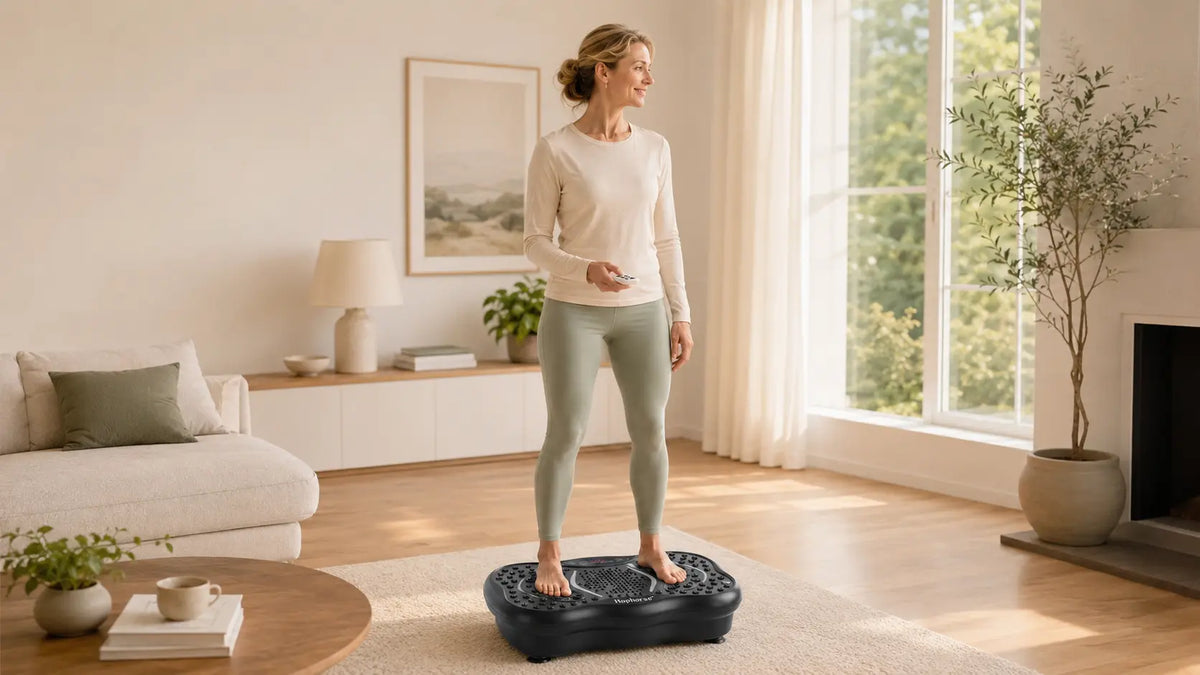
If you are new to vibration plate workouts, the number on the display can be confusing. A vibration plate speed level is simply one way to adjust the intensity of the platform's vibration. For most beginners, the goal is not to find the highest setting. It is to find a level that feels comfortable, stable, and easy to control while you learn how your body responds.
A useful vibration plate speed levels chart can give you a starting point, but there is no single speed that is right for everyone. Your experience level, exercise position, comfort, and the specific vibration plate all matter. The simple approach is to start low, spend a few minutes getting familiar with the movement, and increase the setting gradually if it still feels comfortable.
- Beginners should generally start with a low, comfortable setting.
- Low levels can work well for standing, gentle movement, and getting familiar with vibration.
- Moderate levels may be appropriate for simple exercises such as light squats or calf raises.
- Higher settings are not automatically better or more effective.
- Always follow the instructions for your specific vibration plate.

Beginner Vibration Plate Speed Levels Chart
The exact meaning of a speed number varies between vibration plate models. A setting of 20 on one machine should not automatically be assumed to feel the same as 20 on another. For that reason, the chart below is best used as a practical starting framework rather than a universal prescription.
| General Level | Suggested Range* | Good For | Beginner Focus |
|---|---|---|---|
| Low | 1–30 | Getting familiar with vibration, standing, gentle movement | Comfort and stability |
| Low–Moderate | 31–60 | Light squats, calf raises, simple movement | Controlled movement |
| Moderate | 61–100 | More active standing exercises and short routines | Maintaining good form |
| Higher | 101+ | For users who are already comfortable with their machine | Increase gradually rather than chasing a number |
*These ranges are general examples, not medical or exercise prescriptions. Your machine may use a different scale, and comfort should guide your progression.
Hophorse models offer adjustable speed settings so users can make their routine more or less intense according to the model and their comfort level. For example, the Hophorse Whole Body Vibration Plate lists 180 speed levels, while the Pro Max model is designed with a wider platform and adjustable settings for users who want more room to progress.
How to Choose Your Starting Vibration Plate Speed
If you are wondering, "What speed should I use on a vibration plate?" the most useful answer is: start lower than you think you need and learn the feel of the machine first.
Stand with your feet in a comfortable position, keep your knees softly bent rather than locked, and hold a stable support nearby if you need additional confidence. Begin with a low setting for a few minutes. Pay attention to whether you can maintain a relaxed posture and controlled movement.
If the vibration feels comfortable, you can gradually increase the level. If it feels distracting, uncomfortable, or difficult to control, reduce the setting. There is no benefit to forcing yourself to use a higher number simply because the machine allows it.
Consider the exercise, not just the speed
The same speed can feel different depending on what you are doing. Standing still is generally simpler than performing a squat, calf raise, or resistance-band movement. As an exercise becomes more demanding, you may prefer a lower vibration setting so that you can maintain good control.

Recommended Speed Approach for Common Beginner Exercises
A vibration plate can be used in several simple positions. The right setting depends on your machine and comfort, but the following framework can help you plan a beginner-friendly session.
Standing
Standing is often the simplest place to begin. Use a low setting and focus on finding a stable foot position. This is a useful way to become familiar with the sensation before adding exercises.
Light squats
Once standing feels comfortable, you can try shallow or light squats. A low-to-moderate setting may be easier to control than a higher setting. Keep the movement smooth and avoid locking your knees.
Calf raises
Calf raises can add a simple movement challenge to a short routine. Begin at a comfortable level and use a support such as a nearby countertop or sturdy surface if needed.
Stretching and gentle movement
Some people prefer using a lower setting during stretching or slower movement. The goal is to keep the session comfortable rather than to maximize intensity.
Resistance-band exercises
If your vibration plate includes resistance bands, treat the bands and vibration as two separate variables. Start with a comfortable vibration level and simple band movements before increasing either the vibration intensity or exercise difficulty.
| Activity | Beginner Approach | What to Prioritize |
|---|---|---|
| Standing | Low speed | Balance and comfort |
| Light squats | Low to moderate | Controlled form |
| Calf raises | Low to moderate | Stable footing |
| Gentle movement | Low | Relaxed, controlled movement |
| Resistance bands | Start low | Coordination and form |
A Simple 5–10 Minute Beginner Routine
You do not need a long workout to become familiar with a vibration plate. A short, repeatable routine can be easier to fit into a busy day, especially if your goal is simply to add more low-impact movement at home.
- Minutes 0–2: Stand comfortably on a low setting and get used to the vibration.
- Minutes 2–4: Add gentle knee bends or shallow squats if they feel comfortable.
- Minutes 4–6: Try controlled calf raises or another simple standing movement.
- Minutes 6–8: Continue with a comfortable movement or add a simple resistance-band exercise if appropriate.
- Minutes 8–10: Return to a comfortable setting and finish with gentle standing or stretching.
This type of routine is intentionally simple. The goal is to make movement easy enough to repeat consistently, rather than turning every session into a demanding workout.
For more detailed guidance, see our how to use a vibration plate guide.
Looking for an adjustable vibration plate for home use?
Explore the Hophorse range and compare different designs, speed settings, and features.
Choosing a Vibration Plate With Adjustable Speed Levels
When comparing vibration plates, the number of speed levels is only one factor to consider. For a beginner, easy controls, a stable platform, compact storage, quiet operation, and a design that fits naturally into your home may matter just as much.
For most beginners, the Hophorse Whole Body Vibration Plate is a practical starting point. It has 180 listed speed levels, five preset modes, a compact design, remote control, and included resistance bands. The product is designed around short, everyday home sessions rather than complicated gym-style workouts.
If you want a wider platform and more room to progress, the Hophorse Pro Max Vibration Plate may be a better fit. Its product listing includes a 460 lb maximum user weight capacity, a wider platform, five preset modes, resistance bands, and adjustable speed settings.
You can also compare the full range of Hophorse vibration plates to find a model that fits your available space, preferred controls, and daily movement routine.

Common Mistakes When Choosing Vibration Plate Speed
Starting at the highest setting
A higher number can feel more intense, but more intensity is not automatically better. Starting low gives you time to understand how the platform feels and how your body responds.
Copying someone else's exact speed
Online workout videos can be useful for ideas, but another person's setting may not translate directly to your machine. Different platforms can use different speed scales, vibration patterns, and mechanical designs.
Ignoring exercise form
Vibration should not replace good movement habits. Keep your posture controlled, avoid locking your knees, and use a stable support when necessary.
Increasing too many variables at once
If you are adding resistance bands, changing your exercise, and increasing the vibration setting at the same time, it becomes harder to know what feels comfortable. Change one thing at a time.

Vibration Plate Safety Tips for Beginners
A vibration plate is a fitness device, and it is important to use it according to the manufacturer's instructions. Start gradually, use a stable surface, and stop if you experience unusual discomfort, dizziness, or other concerning symptoms.
If you are pregnant, have a pacemaker or other implanted electronic device, have a heart condition, have recently had surgery, have a known blood-clot risk, have severe osteoporosis, or have another medical condition that could affect safe exercise, consult a healthcare professional before use.
Older adults and anyone who is unsure about whether vibration exercise is appropriate for them should also consider discussing it with a healthcare professional before beginning a new routine.
Frequently Asked Questions
What is the best vibration plate speed for beginners?
There is no single best speed for everyone. Beginners can generally start with a low setting, spend a few minutes getting comfortable, and increase gradually if the movement remains easy to control.
```What speed should I use on a vibration plate for the first time?
Start near the lower end of your machine's available range. The first session should focus on becoming familiar with the vibration, maintaining stable footing, and finding a comfortable posture.
Are higher vibration plate speed levels better?
Not necessarily. Higher settings create a different intensity, but the most useful setting is one that allows you to maintain comfortable, controlled movement. A higher number is not automatically a better workout.
How long should a beginner use a vibration plate?
A short 5–10 minute session can be a practical starting point for someone learning the machine. Follow your product's instructions and increase duration or intensity gradually as you become familiar with the routine.
Can seniors use a vibration plate?
Some older adults may incorporate vibration plates into a gentle home movement routine, but individual needs vary. If you have health conditions, balance concerns, or questions about whether vibration exercise is appropriate, consult a healthcare professional before use.
Do all vibration plates use the same speed levels?
No. Speed scales and vibration characteristics can differ between models. A setting on one machine should not be assumed to feel identical to the same number on another machine.
Can I use resistance bands with a vibration plate?
Some models include resistance bands for additional upper-body and full-body movements. If your machine includes bands, start with simple exercises and a comfortable vibration setting. Always follow the manufacturer's instructions.
Where can I learn more about using a vibration plate?
For a more complete introduction, read our how to use a vibration plate guide, or explore the Hophorse vibration plate collection to compare available models.
Final Takeaway
The best vibration plate speed is not necessarily the highest number on the display. For beginners, a better approach is to start low, learn the feel of the machine, maintain controlled movement, and gradually adjust the setting as you become more comfortable.
Think of the vibration plate speed levels chart as a starting framework rather than a strict formula. Your machine, exercise, comfort level, and experience should all influence the setting you choose.
If adjustable speed, compact home use, and a simple daily routine are priorities for you, you can compare Hophorse vibration plates and choose the model that best fits your space and routine.
Ready to make daily movement a little easier?
Explore Hophorse vibration plates designed for simple, low-impact home routines.
Share:
Does a Vibration Plate Count as Steps?
Can You Get a Workout on a Vibration Plate? | Hophorse