
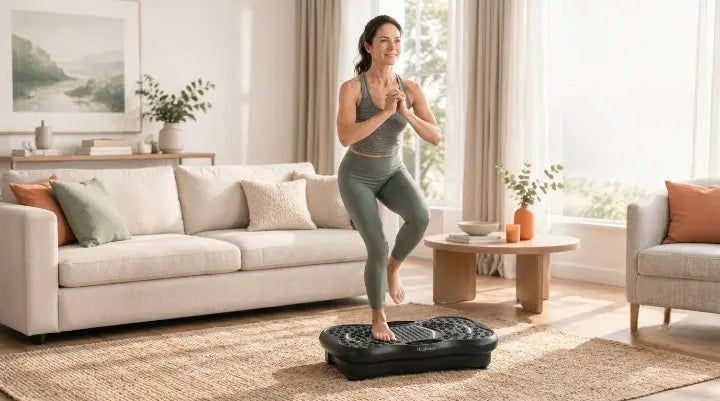
Vibration Plate Guide
Quick answer: 10 minutes on a vibration plate is sometimes compared with about 1,000 walking steps, but this is only a rough activity comparison—not a true conversion.
A vibration plate does not create actual steps, distance, or the same cardiovascular activity as walking. It is better treated as a short, low-impact movement session rather than a replacement for your daily step goal.
| Question | Honest Answer |
|---|---|
| Does a vibration plate create actual steps? | No. You are not completing a walking stride or covering distance. |
| What is the common 10-minute comparison? | About 1,000 steps, based loosely on a 10-minute walking estimate. |
| Will a fitness tracker count the session as steps? | Usually not. Some trackers may record incidental movement, but it is not a reliable step count. |
| Can vibration plate time replace walking? | No. It can complement a movement routine, but it should not replace walking or cardio activity. |
This guide explains where the “1,000 steps” estimate comes from, why the comparison has limits, and how to use a vibration plate in a realistic, beginner-friendly way. If you are still deciding which model fits your routine, you can also compare Hophorse vibration plates designed for low-impact home workouts.
Estimate Calories Burned in 10 Minutes
Your calorie burn can vary depending on body weight, movement intensity, and how you use the vibration plate. Choose your approximate weight, then compare different ways of using the plate.
| Activity | Estimated Calories |
|---|---|
| Standing — No Vibration | — |
| Standing + Vibration | — |
| Soft Knee Bends + Vibration | — |
| Semi-Squat + Vibration | — |
| Short Plank Intervals + Vibration | — |
These numbers are estimates based on generalized activity-intensity assumptions and body weight. They are not a medical measurement, fitness-tracker reading, or guaranteed calorie burn. Actual energy expenditure varies by individual, movement technique, vibration settings, and session intensity.
 Recommended Hophorse Vibration Plates
If your goal is to build a short, consistent home routine, the right model depends on how you plan to use it. Some users want a simple beginner-friendly platform, while others want higher capacity and more room to progress.
How a Vibration Plate Works
A vibration plate uses rapid platform movement to create repeated vibration through your body while you stand, sit, or perform simple movements on the machine. This can encourage your muscles to engage as they respond to the vibration.
That does not mean the machine is creating walking steps. Walking involves forward movement, stride pattern, distance, and cardiovascular effort. A vibration plate works differently. It is better understood as a tool for low-impact movement, muscle activation, and routine building rather than a direct substitute for walking.
The experience also depends on your position, session length, speed level, and whether you are simply standing or adding movements. If you are unsure where to start, read our guide on what level your vibration plate should be on .
Does 10 Minutes on a Vibration Plate Equal 1,000 Steps?
The common claim is that 10 minutes on a vibration plate equals about 1,000 steps. However, there is no official or scientifically fixed conversion from vibration plate time to walking steps. The number is only a rough comparison borrowed from the estimated step count of a short walk.
In practical terms, it is better to think of a vibration plate session as a movement session, not a step replacement. It can complement your routine, but it does not create walking distance and will not usually show up as reliable steps on a fitness tracker.
| Vibration Plate Time | Rough Activity Comparison | Best Use Case |
|---|---|---|
| 5 minutes | Short movement break | First-time users or warm-up routines |
| 10 minutes | Often compared to a short light-activity session | Most beginner home routines |
| 15 minutes | Longer low-impact movement session | Users who are already comfortable |
| 20 minutes | Extended routine | Experienced users with good tolerance |
| 30 minutes | Long session, not necessary for most beginners | Only when appropriate and comfortable |
If your goal is to reach a daily step target, continue using walking as your main step-based activity. If your goal is to add a quick, low-impact home movement habit, a vibration plate can be a useful addition.
 Where the Step Estimate Comes From
The “10 minutes equals about 1,000 steps” comparison usually comes from a simple walking estimate. Many people use 100 steps per minute as a rough pace for moderate walking, so 10 minutes of walking may equal about 1,000 steps.
Some vibration plate discussions borrow that same number to describe a short activity session. But the comparison is not exact because vibration training and walking are different types of movement.
Important: A vibration plate does not produce real steps, distance, or walking gait. The step comparison is only a simple way to understand activity time — not a literal conversion.
Your actual effort level can change based on several factors:
- Speed level: Higher settings may feel more intense, but beginners should start low.
- Body position: Standing still feels different from squats, calf raises, or balance-focused positions.
- Session length: A longer session increases total time under movement.
- Resistance bands: Adding light upper-body movement can make the routine feel more complete.
- Consistency: A short routine done regularly is often more practical than one long session done occasionally.
Why a Vibration Plate Is Not the Same as Walking
Vibration plates can be helpful for building a simple home movement routine, but they should not be treated as a complete replacement for walking. Walking is a weight-bearing, step-based activity that involves forward movement, balance, stride mechanics, and cardiovascular effort.
A vibration plate does not fully copy those same benefits. It does not move you forward, it does not create mileage, and it usually will not count toward your step total on a smartwatch or fitness tracker.
What a vibration plate can support
- Short low-impact movement sessions at home
- Beginner-friendly daily routines
- Muscle activation through standing positions or simple movements
- Light resistance band exercises
- A more consistent habit for people who find long workouts difficult to start
What it should not replace
- Daily walking if you are tracking step goals
- Cardio training for endurance
- Medical treatment or physical therapy
- A balanced fitness routine that includes different types of movement
 How to Make a 10-Minute Vibration Plate Session More Effective
If you want your 10-minute session to feel more active, the key is to avoid standing completely still the entire time. Start with simple movements that feel controlled and beginner-friendly.
| Time | Beginner-Friendly Movement | Why It Helps |
|---|---|---|
| 0–2 minutes | Comfortable standing | Helps you get used to the platform and vibration level |
| 2–4 minutes | Soft knee bends | Adds gentle lower-body engagement |
| 4–6 minutes | Calf raises | Adds simple lower-leg movement while staying controlled |
| 6–8 minutes | Resistance band pulls | Adds light upper-body movement |
| 8–10 minutes | Relaxed standing finish | Lets you finish the session comfortably |
For a guided routine, try this 10-minute vibration plate workout for beginners . You can also read our guide on the best vibration plate positions for beginners .
Beginner tip: More intensity is not always better. Start with a lower level, keep the session short, and increase gradually only when you feel comfortable and stable.
Looking for a simple way to start?
Compare Hophorse vibration plates designed for low-impact home routines, compact living spaces, and beginner-friendly daily movement.
Shop Hophorse Vibration PlatesSafety Notes Before You Start
Vibration plates are simple to use, but they are not right for everyone. Start with a short session, use a comfortable level, and stop if you feel dizzy, unstable, or uncomfortable.
Do not use a vibration plate without medical guidance if you are pregnant, have a pacemaker, have serious heart conditions, blood clot risks, recent surgery, epilepsy, severe osteoporosis, or any medical concern that could make vibration training unsafe for you.
When unsure, consult a healthcare professional before use and follow the product manual for your specific machine.
Frequently Asked Questions
Does 10 minutes on a vibration plate really equal 1,000 steps?
Not literally. There is no official step conversion for vibration plate training. The 1,000-step idea is a rough activity comparison based on a short walking session, not a true step count.
Does a vibration plate count as steps?
No. A vibration plate usually does not count as steps because you are not walking forward. Most fitness trackers measure steps through walking or running motion, so vibration plate sessions may not increase your recorded step count.
Can a vibration plate replace walking?
A vibration plate can support a home movement routine, but it should not fully replace walking. Walking is still important for step goals, cardio endurance, and everyday movement.
Is 10 minutes on a vibration plate enough?
For many beginners, 5–10 minutes is a practical starting point. The best session length depends on your comfort level, speed setting, position, and product manual.
How many calories does 10 minutes on a vibration plate burn?
Calorie burn varies based on body weight, speed level, session length, and whether you are standing still or adding movements like calf raises or light squats. It is better to think of a vibration plate as a consistency tool rather than a guaranteed calorie-burning shortcut.
What is the best way to use a vibration plate for 10 minutes?
A simple approach is to start with comfortable standing, then add soft knee bends, calf raises, and light resistance band pulls. Beginners should start low and increase gradually.
Which Hophorse vibration plate is best for beginners?
For most beginners, the Hophorse Whole Body Vibration Plate is a practical starting point. You can also compare all Hophorse vibration plates to choose the right model for your space and routine.
Final Takeaway
So, how many steps is 10 minutes on a vibration plate? It is best to treat it as a short low-impact movement session, not a literal step count. The common 1,000-step comparison can help you understand the idea of activity time, but a vibration plate does not replace walking or add real steps to your tracker.
Used the right way, a vibration plate can be a practical tool for building a simple home routine, especially when you start with short sessions and add beginner-friendly movements.
Compare Hophorse Vibration Plates
Share:
Does a Vibration Plate Help Reduce Cellulite? What Science Says
Vibration Plate Before and After: What Results Can You Really Expect?