
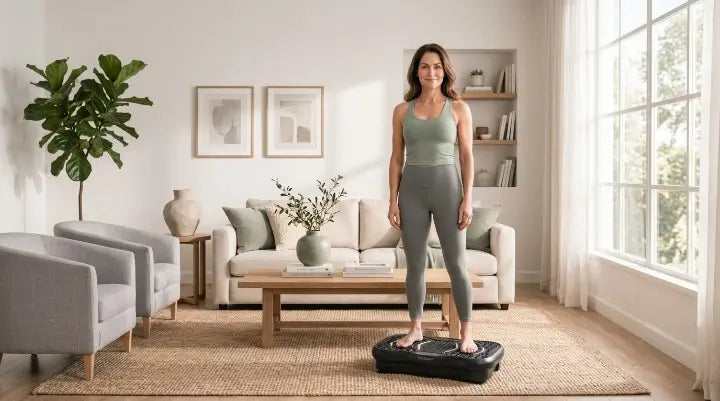
Vibration Plate Settings Guide
If you are asking what level your vibration plate should be on, the safest answer is to start low and increase gradually. Most beginners should begin in the lowest comfortable range of their machine, use a short 5–10 minute session, and choose a level that lets them stay balanced, relaxed, and in control.
Quick answer: Start with a low vibration plate level for your first sessions. If your machine uses a numbered scale, begin around the lowest 10–20% of the available range rather than jumping to the middle or highest levels. Increase slowly only when you can maintain good posture, steady balance, and comfortable movement.
The right vibration plate speed setting depends on your experience level, body position, session length, and goal. This guide explains how to choose a beginner-friendly level, when to increase intensity, and how to avoid using a setting that is too high. If you are still choosing a model, you can compare Hophorse vibration plates designed for low-impact home workouts.
Key Takeaways
- Beginners should start with a low vibration plate setting.
- The best level is the one that feels controlled, not overwhelming.
- Higher levels do not automatically create better results.
- Use lower levels for standing, balance, and first-time sessions.
- Increase intensity gradually after your posture and balance feel steady.
- Reduce the level if you feel dizzy, numb, unstable, or uncomfortable.
Vibration Plate Levels Explained
Most vibration plates use adjustable speed, level, or intensity settings. A higher number usually means stronger vibration, but the exact meaning can vary by machine. One model may use a 1–99 scale, while another may offer 180 or 200 speed levels.
Because the scales are not always the same, it is better to think in terms of low, medium, and high intensity ranges rather than one universal number.
| Intensity Range | What It Means | Best For |
|---|---|---|
| Low range | Gentler vibration and easier balance control | Beginners, standing, short sessions, warm-ups |
| Medium range | More noticeable vibration and muscle engagement | Comfortable users, light movement, resistance bands |
| High range | Stronger vibration that requires more control | Experienced users and short structured intervals |
What matters most is not choosing the highest number. The best vibration plate level is the one that allows you to keep proper posture, stay balanced, and finish the session comfortably.
Best Vibration Plate Level for Beginners
If you are new to vibration plate training, begin at a low setting and keep the session short. Your first goal is not intensity. Your first goal is learning how the platform feels, how your balance responds, and which position feels comfortable.
Beginner starting point
- Start in the lowest comfortable range of your machine.
- Use a 5–10 minute session.
- Keep your knees slightly soft instead of locked.
- Stand with both feet stable on the platform.
- Hold onto support if needed, especially during your first session.
- Increase only after several comfortable sessions.
Beginner rule: You should feel controlled vibration and light muscle engagement, not shaking, numbness, pain, dizziness, or loss of balance.
For help choosing session length, read our guide on how long to stand on a vibration plate.
Vibration Plate Speed Settings Chart
Since vibration plate scales vary by brand and model, use this chart as a general guide. Always follow your product manual and adjust based on comfort.
| Use Case | Suggested Level Approach | Session Time | Best Practice |
|---|---|---|---|
| First-time use | Lowest comfortable range | 3–5 minutes | Learn the platform and focus on balance. |
| Beginner standing | Low range | 5–10 minutes | Keep knees slightly soft and posture relaxed. |
| Light movement | Low to medium range | 5–10 minutes | Add soft knee bends or calf raises. |
| Resistance bands | Low to medium range | 5–10 minutes | Start lower so your balance stays controlled. |
| Active routine | Medium range | 10–15 minutes | Use controlled squats, calf raises, or intervals. |
| Advanced intervals | Medium to higher range | Short intervals only | Use only if experienced and comfortable. |
If your machine has many levels, such as 180 or 200 speed settings, do not feel like you need to use the upper range. Many home users get a useful routine from lower or middle settings combined with consistent movement.
Choosing the Right Level Based on Your Goal
Your ideal setting also depends on what you are trying to do during the session. A relaxed standing routine usually needs a lower level than a movement-based routine with squats or resistance band pulls.
| Goal | Suggested Setting | How to Use It |
|---|---|---|
| Beginner daily movement | Low range | Stand comfortably, keep knees soft, and use short sessions. |
| Balance and posture practice | Low range | Stay controlled and avoid high settings that make you unstable. |
| Low-impact home workout | Low to medium range | Add soft knee bends, calf raises, or resistance band movement. |
| More active exercise session | Medium range | Use controlled movements and keep the session manageable. |
| Advanced strength-style intervals | Medium to higher range | Use short intervals only if you already have experience. |
If your goal is weight management or calorie burn, do not rely on the highest level alone. Movement, consistency, session length, and overall lifestyle matter more than simply increasing intensity. For a realistic explanation, see our guide on how many calories you burn on a vibration plate.
Signs Your Vibration Plate Level Is Too High
A vibration plate should feel controlled, not overwhelming. If a setting makes it hard to stay balanced or relaxed, reduce the level immediately.
Reduce the level if you notice:
- Dizziness or lightheadedness
- Loss of balance
- Numbness or tingling
- Joint discomfort
- Headache
- Lower back discomfort
- Excessive muscle fatigue
- Difficulty keeping proper posture
Important: More intensity does not automatically mean a better session. If the level causes discomfort or poor form, it is too high for your current routine.
How to Increase Vibration Plate Levels Safely
Increase your vibration plate setting slowly. A good progression should feel natural, not forced. Before increasing the level, make sure you can complete your current session with steady balance, good posture, and no discomfort.
A safe progression method
- Start with a low setting for several sessions.
- Keep the same level while learning basic positions.
- Add simple movement before increasing intensity.
- Increase by a small amount only when comfortable.
- Return to a lower setting if your posture or balance gets worse.
Many users make the mistake of increasing speed too quickly. A lower level with controlled movement is usually more useful than a high level that makes you tense or unstable.
A Simple Beginner Level Progression Plan
Use this simple plan if you are new to vibration plates. Adjust based on your model, your comfort, and your product manual.
| Stage | Level Approach | Session Length | Focus |
|---|---|---|---|
| First session | Lowest comfortable level | 3–5 minutes | Learn the feeling of the platform. |
| Week 1 | Low range | 5–8 minutes | Practice posture and balance. |
| Week 2 | Low to medium range | 8–10 minutes | Add soft knee bends or calf raises. |
| Week 3+ | Comfortable medium range | 10–15 minutes | Add resistance bands or structured intervals if comfortable. |
For more movement ideas, read our guide to the best vibration plate positions for beginners.
Looking for a vibration plate with adjustable speed levels?
Explore Hophorse vibration plates designed for beginner-friendly home routines, compact spaces, and low-impact movement.
Shop Hophorse Vibration PlatesRecommended Hophorse Vibration Plates
A good vibration plate should make it easy to start low, adjust gradually, and stay stable during your routine. The best choice depends on your space, support needs, and how much speed control you want.
Safety Notes Before You Start
Vibration plates are simple to use, but they are not right for everyone. Start with a lower speed level, keep your first sessions short, and stop if you feel dizzy, unstable, overly fatigued, or uncomfortable.
Do not use a vibration plate without medical guidance if you are pregnant, have a pacemaker, have serious heart conditions, blood clot risks, recent surgery, epilepsy, severe osteoporosis, or any medical concern that could make vibration training unsafe for you.
When unsure, consult a healthcare professional before use and follow the user manual for your specific machine.
Frequently Asked Questions
What level should my vibration plate be on?
Beginners should start with a low vibration plate level and keep the session short. The right level should feel controlled and comfortable, allowing you to maintain steady balance and proper posture.
What is the best vibration plate level for beginners?
The best beginner level is usually in the lowest comfortable range of your machine. Start with 5–10 minutes, then increase gradually only after several comfortable sessions.
Is a higher vibration plate level better?
Not necessarily. Higher levels create stronger vibration, but they do not automatically make the session better. A lower level with good posture and controlled movement is often more useful than a high level that feels unstable.
How do I know if my vibration plate level is too high?
If you feel dizzy, numb, unstable, overly fatigued, or have joint or back discomfort, the level may be too high. Lower the intensity and return to a setting that feels controlled.
What vibration plate level should I use for standing?
For standing only, start with a low range and keep your knees slightly soft. Standing sessions should feel comfortable and controlled, especially for beginners.
What vibration plate level should I use with resistance bands?
Start lower when using resistance bands because your arms and upper body movement can affect balance. Once you feel stable, you can gradually increase the level if needed.
How often should I increase the vibration level?
There is no fixed schedule. Increase only when your current setting feels comfortable for several sessions and you can maintain good posture, balance, and control.
Which Hophorse vibration plate is best for adjustable levels?
For most beginners, the Hophorse Whole Body Vibration Plate is a practical starting point. If you want higher support and more room to progress, the Hophorse Pro Max Vibration Plate may be a better fit.
The Bottom Line
So, what level should your vibration plate be on? Start low, keep your first sessions short, and choose a setting that feels controlled. Once your balance and posture feel steady, you can gradually increase the level based on your routine and comfort.
The best setting is not always the highest setting. For most home users, a comfortable level combined with consistency, good posture, and simple movement is the better approach.
Compare Hophorse Vibration Plates
Share:
How Often Should You Use a Vibration Plate? A Practical Weekly Guide
Vibration Plates and Osteoporosis: What You Need to Know