
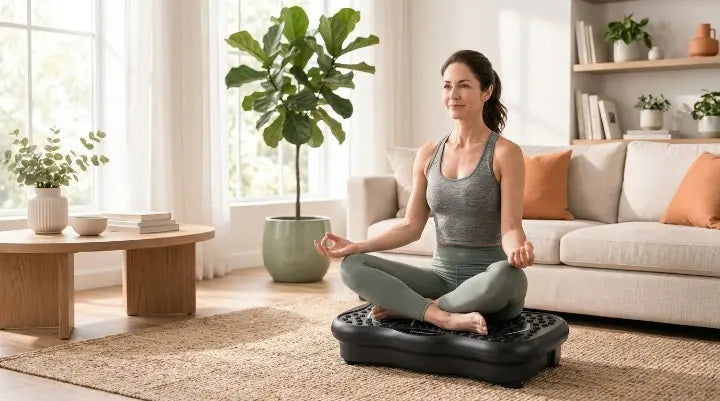
Vibration Plate Calorie Guide
If you are wondering how many calories you burn on a vibration plate, the most realistic answer is: it depends on how you use it. Standing still on a vibration plate usually burns fewer calories than an active routine with squats, calf raises, planks, or resistance band movements.
Quick answer: A vibration plate session may burn anywhere from a small number of calories during relaxed standing to a higher amount during an active workout. Your actual calorie burn depends on body weight, session length, vibration level, exercise selection, and effort. It is better to view a vibration plate as a tool for adding low-impact movement and consistency — not as a guaranteed calorie-burning shortcut.
This guide explains realistic calorie burn ranges, why estimates vary, what affects your results the most, and how to make a vibration plate session more active. If you are building a simple home routine, you can also compare Hophorse vibration plates designed for low-impact home workouts.
Key Takeaways
- Standing still burns fewer calories than adding active movements.
- Calorie burn varies by body weight, session length, vibration level, and exercise type.
- A vibration plate is not a magic weight-loss machine or a replacement for walking, strength training, or balanced nutrition.
- Short, consistent routines are usually more practical than occasional long sessions.
- For beginners, start with 5–10 minutes and add movement gradually.
- Use calorie estimates as general guidance, not exact numbers or guaranteed results.
How Many Calories Does a Vibration Plate Burn?
There is no single calorie number that applies to every vibration plate user. A relaxed standing session, a light movement session, and a structured workout can all feel very different. That is why calorie burn estimates should be viewed as ranges, not fixed promises.
In general, standing still on a vibration plate may create light activity, while active movements such as squats, calf raises, planks, or resistance band pulls can make the session more demanding.
| Session Style | What It Looks Like | Calorie Burn Context |
|---|---|---|
| Standing only | Standing comfortably with knees slightly soft | Usually the lowest calorie-burn option |
| Light movement | Soft knee bends, calf raises, gentle position changes | More active than standing, still beginner-friendly |
| Active workout | Squats, planks, lunges, resistance band pulls, intervals | Typically burns more calories because more muscles are involved |
If you are new to vibration plates, start with a short session before focusing on calories. Learn more about session length in our guide on how long to stand on a vibration plate.
Why Calorie Estimates Vary
Two people can use the same vibration plate for the same amount of time and still burn different amounts of energy. That is because calorie burn depends on several variables, not just the machine itself.
- Body weight: Larger bodies generally use more energy during movement.
- Session length: More minutes can increase total activity time, but longer is not always better.
- Vibration level: A higher setting may feel more intense, but beginners should start low.
- Body position: Standing, squatting, and planking require different levels of effort.
- Movement selection: Active exercises usually use more energy than passive standing.
- Fitness level: Your balance, strength, and familiarity with the movement can affect effort.
Important: Calorie estimates are never exact. Use them as a general reference while focusing on consistency, comfort, posture, and safe movement.
What Affects Calorie Burn the Most?
The biggest factor is not simply how long you stand on the machine. The biggest difference usually comes from how active your session is.
| Factor | Why It Matters | Beginner-Friendly Tip |
|---|---|---|
| Exercise type | Active moves involve more muscles than standing still. | Start with soft knee bends and calf raises. |
| Session length | Longer sessions add time, but fatigue can affect posture. | Begin with 5–10 minutes. |
| Speed level | Higher levels can feel more demanding. | Start low and increase gradually. |
| Resistance bands | Upper-body movement can make the session more complete. | Use light, controlled pulls. |
| Consistency | A repeatable routine matters more than one intense session. | Try 3–4 short sessions per week. |
If you are building an exercise-based routine, see our vibration plate exercise chart for simple movement ideas.
Standing vs. Moving on a Vibration Plate
Standing still can be a good starting point for beginners because it lets you get familiar with the platform and vibration level. But if your goal is to make the session feel more active, movement matters.
| Activity | Effort Level | Best For |
|---|---|---|
| Standing only | Low | First-time users, warm-ups, learning balance |
| Light movement | Moderate | Beginners who want a more active session |
| Active exercises | Higher | Comfortable users adding squats, planks, or bands |
The goal is not to make every session intense. For many home users, a simple, repeatable routine is easier to maintain. If you are unsure which level to choose, read our guide on what level your vibration plate should be on.
Vibration Plate vs. Walking vs. Running
A vibration plate, walking, and running all support movement in different ways. They are not the same type of activity, so it is not helpful to treat one as a perfect replacement for another.
| Activity | Main Benefit | Impact Level | Best Use |
|---|---|---|---|
| Walking | Step-based daily movement and cardio support | Low impact | Daily activity, step goals, outdoor movement |
| Vibration plate | Low-impact home movement and muscle activation | Low impact | Short home routines, movement breaks, resistance band work |
| Running | Higher-intensity cardio training | Higher impact | Cardio endurance and performance training |
A vibration plate can be a useful addition to your routine, especially if you want a compact way to move at home. But for best results, it should work alongside walking, strength training, and other healthy habits.
Can a Vibration Plate Support Weight Management?
A vibration plate may support a more active lifestyle when used consistently, but it should not be viewed as a standalone weight-loss solution. Weight management depends on overall activity, nutrition, sleep, consistency, and the total routine you follow.
The most realistic way to use a vibration plate is as a tool that helps you move more often at home. That can be helpful if you struggle to start longer workouts, sit for long hours, or want a short low-impact routine that feels easy to repeat.
What it can help with
- Adding short movement sessions into your day
- Making simple exercises feel more engaging
- Creating a consistent home fitness habit
- Supporting low-impact movement when you do not want bulky gym equipment
What it cannot guarantee
- Guaranteed calorie burn
- Spot reduction or targeted belly fat loss
- Weight loss without nutrition and overall lifestyle changes
- The same benefits as walking, running, or strength training
A Simple 20-Minute Active Vibration Plate Routine
If you are comfortable with the machine and want a more active session, try a simple routine like this. Beginners should shorten the session and start with lower settings.
| Time | Movement | Purpose |
|---|---|---|
| 0–3 minutes | Comfortable standing | Warm up and get used to the platform |
| 3–6 minutes | Soft knee bends | Add light lower-body engagement |
| 6–9 minutes | Calf raises | Add controlled lower-leg movement |
| 9–12 minutes | Resistance band pulls | Add light upper-body movement |
| 12–16 minutes | Bodyweight squats or supported squats | Increase full-body effort if comfortable |
| 16–20 minutes | Relaxed standing or gentle stretching | Cool down and finish comfortably |
Beginner tip: You do not need to start with 20 minutes. A 5–10 minute session is a better starting point for many new users.
Want a simple way to move more at home?
Explore Hophorse vibration plates designed for compact spaces, low-impact routines, and beginner-friendly home movement.
Shop Hophorse Vibration PlatesRecommended Hophorse Vibration Plates
The right vibration plate depends on how you plan to use it. If your goal is calorie burn, focus less on long standing sessions and more on a model that feels stable, easy to control, and practical enough to use consistently.
Safety Notes Before You Start
Vibration plates are simple to use, but they are not right for everyone. Start with a lower speed level, keep your first sessions short, and stop if you feel dizzy, unstable, overly fatigued, or uncomfortable.
Do not use a vibration plate without medical guidance if you are pregnant, have a pacemaker, have serious heart conditions, blood clot risks, recent surgery, epilepsy, severe osteoporosis, or any medical concern that could make vibration training unsafe for you.
When unsure, consult a healthcare professional before use and follow the user manual for your specific machine.
Frequently Asked Questions
How many calories does 10 minutes on a vibration plate burn?
Calorie burn varies by body weight, vibration level, and movement type. A relaxed standing session may burn fewer calories, while adding movements such as calf raises, squats, or resistance band pulls can make the session more active.
Does standing on a vibration plate burn calories?
Yes, but standing still usually burns fewer calories than active movement. If your goal is a more active session, add controlled movements instead of only standing.
Can a vibration plate help with weight loss?
A vibration plate may support a more active home routine, but it does not guarantee weight loss. Weight management depends on overall activity, nutrition, consistency, and other lifestyle factors.
Can a vibration plate burn belly fat?
No exercise can guarantee spot reduction in one specific area. A vibration plate can support low-impact movement, but belly fat loss depends on total activity, nutrition, and a consistent routine.
Is a vibration plate better than walking for calories?
Not necessarily. Walking and vibration plates support movement in different ways. Walking is better for step goals and cardio movement, while a vibration plate can support short low-impact routines and muscle activation at home.
How often should I use a vibration plate?
Many beginners start with 3–4 short sessions per week. As you become more comfortable, you can adjust based on your routine, comfort level, and product manual. See our guide on how long to stand on a vibration plate.
Which Hophorse vibration plate is best for active home workouts?
For most beginners, the Hophorse Whole Body Vibration Plate is a practical starting point. If you want higher support and more room to progress, the Hophorse Pro Max Vibration Plate may be a better fit.
The Bottom Line
So, how many calories do you burn on a vibration plate? The realistic answer depends on how actively you use it. Standing still is usually lower effort, while controlled movements such as squats, calf raises, planks, or resistance band pulls can make the session more active.
A vibration plate is not a magic calorie-burning machine, but it can be a useful tool for building a simple, low-impact home routine. Focus on safe movement, realistic expectations, and consistency.
Compare Hophorse Vibration Plates
Share:
Is a Vibration Plate Good for Lymphatic Drainage?
What Is a Vibration Plate Good For?