
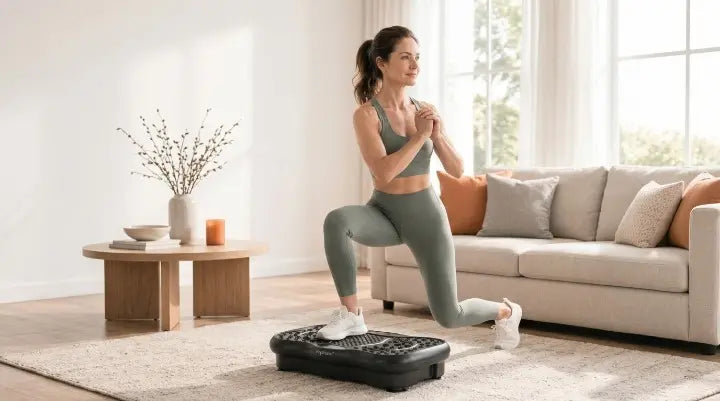
Beginner Vibration Plate Guide
If you are wondering how long to stand on a vibration plate, the best starting point for most beginners is 5–10 minutes per session at a comfortable lower speed level. As you get more familiar with the machine, you can gradually build toward 10–15 minutes, depending on your comfort, routine, and product manual.
Quick answer: Beginners can usually start with 5–10 minutes on a vibration plate. Intermediate users may use 10–15 minutes, while more experienced users may work up to 15–20 minutes. For most home users, longer sessions are not necessary, and consistency matters more than duration.
This guide explains how long each session should be, how often to use a vibration plate, when to increase your time, and how to build a safe, realistic home routine. If you are still choosing a machine, you can compare Hophorse vibration plates designed for beginner-friendly home workouts.
Key Takeaways
- Most beginners should start with 5–10 minutes per session.
- More time does not always mean better results.
- For most home users, 10–15 minutes is enough for a practical routine.
- Start with a lower speed level and increase gradually only when comfortable.
- Stop if you feel dizzy, unstable, overly tired, or uncomfortable.
- People with medical concerns should ask a healthcare professional before use.
What Is the Ideal Vibration Plate Time?
The ideal vibration plate session length depends on your experience level, speed setting, body position, and how your body responds. If you are new to vibration training, the safest and most practical approach is to begin with a short session and increase gradually.
Vibration plates are different from long cardio workouts. You do not need to stand on one for a long time to make it part of a home fitness routine. In many cases, a short, consistent session is more realistic and easier to repeat than a long session that leaves you tired or uncomfortable.
Beginner rule: Start with 5–10 minutes, keep the level comfortable, and focus on posture before increasing time or intensity.
If you are not sure what speed to use, read our guide on what level your vibration plate should be on.
Recommended Vibration Plate Time by Experience Level
The easiest way to choose your session length is to match it to your current comfort level. Beginners should not copy advanced routines right away. Instead, start short, pay attention to balance, and build up slowly.
| Experience Level | Suggested Time per Session | Suggested Frequency | Best Approach |
|---|---|---|---|
| Beginner | 5–10 minutes | 3–4 times per week | Start low, stand comfortably, and keep sessions short. |
| Intermediate | 10–15 minutes | 4–5 times per week | Add light movements such as calf raises or soft knee bends. |
| Advanced | 15–20 minutes | Up to 5 times per week | Use structured routines with controlled movements and rest days when needed. |
For most users, sessions longer than 20 minutes are not necessary. A longer session is not automatically better, especially if your posture starts to break down or you feel unstable.
How Long Should You Stand Based on Your Goal?
Your session length can also depend on why you are using the vibration plate. A short relaxed session feels different from a more active session with squats, calf raises, or resistance band movements.
| Goal | Suggested Session Length | Recommended Approach |
|---|---|---|
| Beginner movement | 5–10 minutes | Use a lower level and focus on balance, posture, and comfort. |
| Low-impact daily routine | 10 minutes | Use standing, soft knee bends, and light calf raises. |
| Active home workout | 10–15 minutes | Add controlled movements such as squats or resistance band pulls. |
| Post-work movement break | 5–10 minutes | Use a comfortable level after sitting for long periods. |
| More advanced routine | 15–20 minutes | Use intervals, change positions, and avoid overdoing one position. |
If your goal is weight management or calorie burn, avoid thinking of the vibration plate as a shortcut. Calorie burn depends on body weight, session length, speed level, position, and whether you add active movements. For a more realistic breakdown, see our guide on how many calories you burn on a vibration plate.
Can You Stand on a Vibration Plate Too Long?
Yes. Standing on a vibration plate for too long can make the session feel less comfortable and less useful. More time is not always better. If you are tired, dizzy, unstable, or uncomfortable, stop the session and give your body time to recover.
Signs you may be overdoing it
- Dizziness or lightheadedness
- Feeling unstable on the platform
- Muscle fatigue that affects your posture
- Joint discomfort
- Lower back discomfort
- Feeling worse after the session instead of comfortable
Practical guideline: Most beginners should avoid long sessions. If you are new, 5–10 minutes is enough to start. Build gradually instead of jumping into 20–30 minute routines.
Should You Stand Still or Move?
Standing still is fine when you are learning how the platform feels. It helps you understand the vibration level, your balance, and your posture. However, once you feel comfortable, adding simple movements can make your session feel more active.
Beginner-friendly movement options
- Comfortable standing: Best for first-time users learning the machine.
- Soft knee bends: Adds gentle lower-body engagement.
- Calf raises: A simple way to add controlled lower-leg movement.
- Resistance band pulls: Adds light upper-body movement if your machine includes bands.
- Position changes: Helps avoid staying in one posture too long.
For more ideas, read our beginner guide to the best vibration plate positions.
Can You Use a Vibration Plate Every Day?
Some users may use a vibration plate daily for short, comfortable sessions, but daily use is not required for most beginners. A realistic starting point is 3–4 sessions per week, especially if you are still learning your preferred speed level and position.
If you use it more often, keep the sessions short and pay attention to how you feel. If your legs, back, or joints feel uncomfortable, reduce the frequency or intensity.
| User Type | Suggested Frequency | Session Length |
|---|---|---|
| New beginner | 3 times per week | 5–8 minutes |
| Comfortable beginner | 3–4 times per week | 5–10 minutes |
| Regular home user | 4–5 times per week | 10–15 minutes |
| Advanced user | Up to 5 times per week | 15–20 minutes |
A Simple 10-Minute Beginner Routine
If you want an easy way to start, try a short 10-minute routine. Keep the speed level comfortable and focus on control rather than intensity.
| Time | Movement | Why It Helps |
|---|---|---|
| 0–2 minutes | Comfortable standing | Helps you get used to the vibration level. |
| 2–4 minutes | Soft knee bends | Adds gentle lower-body engagement. |
| 4–6 minutes | Calf raises | Adds controlled lower-leg movement. |
| 6–8 minutes | Resistance band pulls | Adds light upper-body movement if your model includes bands. |
| 8–10 minutes | Relaxed standing finish | Lets you finish the session comfortably. |
This type of short routine is one reason many home users like vibration plates. It feels easier to fit into a busy day than a long workout, especially when you use it before work, after sitting for hours, or while watching TV.
Looking for a beginner-friendly vibration plate?
Explore Hophorse vibration plates designed for compact home spaces, low-impact daily movement, and simple 5–10 minute routines.
Shop Hophorse Vibration PlatesRecommended Hophorse Vibration Plates
The best model depends on your routine, space, and comfort level. For most users, the goal is not to use the machine for as long as possible. The goal is to choose a stable, easy-to-use vibration plate that helps you stay consistent.
Safety Notes Before You Start
Vibration plates are simple to use, but they are not right for everyone. Start with a lower speed level, keep your first sessions short, and stop if you feel dizzy, unstable, overly fatigued, or uncomfortable.
Do not use a vibration plate without medical guidance if you are pregnant, have a pacemaker, have serious heart conditions, blood clot risks, recent surgery, epilepsy, severe osteoporosis, or any medical concern that could make vibration training unsafe for you.
When unsure, consult a healthcare professional before use and follow the user manual for your specific machine.
Frequently Asked Questions
How long should beginners stand on a vibration plate?
Most beginners should start with 5–10 minutes per session at a comfortable lower speed level. Start short, focus on posture, and increase gradually only when you feel stable and comfortable.
Is 10 minutes on a vibration plate enough?
Yes. For many home users, 10 minutes is enough for a simple low-impact movement session. The key is consistency, proper posture, and choosing a speed level that feels comfortable.
Is 30 minutes on a vibration plate too long?
For most beginners, 30 minutes is longer than necessary. Long sessions may increase fatigue or discomfort. Most users are better off starting with 5–10 minutes and gradually working up to 10–15 minutes.
Can I use a vibration plate every day?
Some users may use a vibration plate daily for short, comfortable sessions, but daily use is not required. Beginners often do well with 3–4 sessions per week while they learn their preferred level and routine.
Should I stand still on a vibration plate?
Standing still is fine for beginners. Once you feel comfortable, you can add simple movements such as soft knee bends, calf raises, or resistance band pulls to make the session more active.
What speed level should I use with a 10-minute session?
Start with a lower level and increase gradually only when comfortable. Your ideal level depends on your machine, body position, balance, and experience. See our guide on vibration plate speed levels for more help.
Which Hophorse vibration plate is best for short home routines?
For most beginners, the Hophorse Whole Body Vibration Plate is a practical starting point. You can also compare all Hophorse vibration plates to choose the right model for your space and routine.
The Bottom Line
For most beginners, the best answer to “how long should you stand on a vibration plate?” is simple: start with 5–10 minutes, keep the speed comfortable, and focus on consistency. As you become more comfortable, you can gradually build toward 10–15 minutes.
Longer sessions are not automatically better. A short routine with good posture, controlled movement, and a stable vibration plate is usually more useful than standing too long and losing form.
Compare Hophorse Vibration Plates
Share:
What Is a Vibration Plate Good For?
Vibration Plate: How to Use It the Right Way