
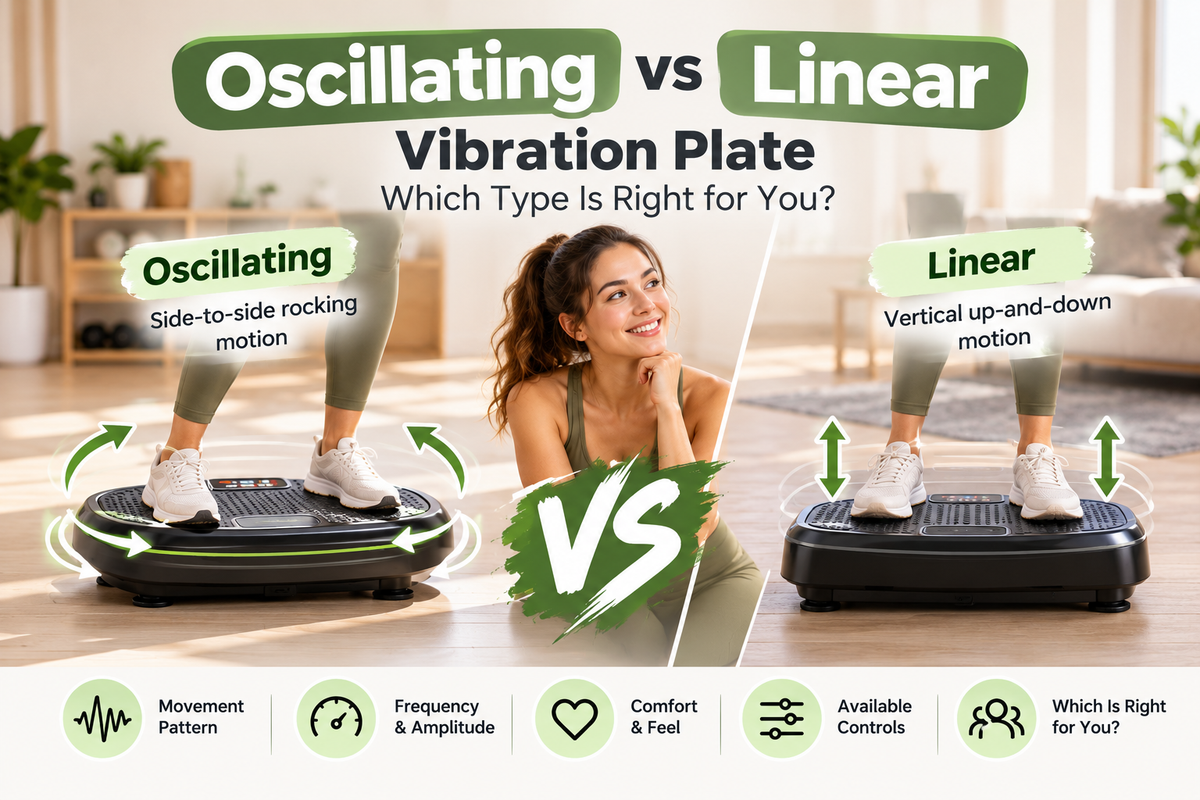
When comparing an oscillating vs linear vibration plate, the biggest difference is how the platform moves. An oscillating plate rocks from side to side around a central pivot, while a linear vibration plate moves vertically, lifting and lowering both sides together. These different movement patterns can create different sensations during a workout and may influence which machine feels more comfortable for your routine. Neither type is automatically better for everyone. Understanding platform movement, frequency, amplitude, comfort, and available controls can help you choose a vibration plate that fits your home fitness goals and experience level.
In This Guide
What Is an Oscillating Vibration Plate?
An oscillating vibration plate, also called a pivotal or side-alternating vibration plate, moves around a central pivot point. Imagine a seesaw: when one side rises, the opposite side moves down. This alternating motion creates a rocking sensation beneath your feet.
Unlike a platform that moves uniformly, an oscillating plate changes the relative position of the left and right sides during each cycle. Your stance can also influence how pronounced the movement feels.
How does oscillating movement feel?
Users may notice a gentle side-to-side rocking sensation. Because the platform pivots near its center, foot placement can change the experience. Standing closer to the center generally produces less platform travel at the feet, while standing farther from the pivot can produce a more noticeable movement.
For home workouts, this type of platform may appeal to people who prefer an alternating movement pattern. However, comfort depends on the machine's settings, movement range, stance, and individual tolerance.
What Is a Linear Vibration Plate?
A linear vibration plate is commonly called a vertical vibration plate. Its platform moves primarily straight up and down, with both sides rising and lowering together rather than rocking in opposite directions.
Think of an elevator moving vertically. The platform follows a more synchronized movement pattern, so both feet experience the vertical motion at the same time.
How does linear movement feel?
Linear vibration may feel more uniform across the platform because both sides move together. Instead of alternating between the left and right foot, the movement is primarily vertical.
The actual sensation depends on the machine's frequency, amplitude, construction, and operating settings. A low-amplitude vertical platform can feel quite different from a machine with a larger movement range, even if both are described as linear.
Oscillating vs Linear Vibration Plate: Key Differences
The main distinction is the direction and coordination of platform movement. The following comparison explains what to look for when evaluating the two types.
| Feature | Oscillating Plate | Linear Plate |
|---|---|---|
| Movement direction | Alternating side-to-side rocking | Primarily vertical up-and-down movement |
| Platform mechanics | Rotates around a central pivot | Both sides move vertically together |
| Foot movement | Left and right sides move in opposite directions | Both feet move up and down together |
| Stance influence | Distance from the pivot can affect movement at the feet | Stance width does not create the same pivot-related change |
| Movement sensation | Rocking or alternating | More synchronized vertical movement |
| Buying considerations | Pivot design, movement range, and foot placement | Vertical amplitude, frequency, and platform stability |
One important point: the movement label alone does not tell you how intense a vibration plate will feel. Two oscillating machines can have very different movement ranges, just as two linear machines can operate at different frequencies and amplitudes.
Quick takeaway: Oscillating describes alternating side-to-side platform movement. Linear describes primarily synchronized vertical movement. Compare the actual technical specifications rather than relying on marketing names alone.
Frequency and Amplitude: Two More Factors to Understand
When shopping for a vibration plate, movement type is only part of the picture. Two other specifications help explain how a machine operates: frequency and amplitude.
1. Frequency
Frequency refers to how many vibration cycles occur per second. It is measured in hertz (Hz). For example, a frequency of 10 Hz means the platform completes 10 cycles per second.
A higher frequency does not automatically mean a better workout. The experience also depends on movement type, amplitude, platform design, and how the machine is used.
2. Amplitude
Amplitude describes the extent of movement during a vibration cycle. It is commonly expressed in millimeters (mm). A platform with a larger movement range may feel different from one with a smaller range, even when both operate at the same frequency.
When comparing specifications, check whether the manufacturer reports peak amplitude, peak-to-peak displacement, or another measurement. These terms are not always interchangeable.
Shopping tip: Speed levels such as 1–180 or 1–300 are not the same as frequency in Hz. A numbered setting on one model cannot be directly compared with the same number on another brand.
Which Vibration Plate Should You Choose?
There is no universal winner in the oscillating vs linear vibration plate comparison. The right choice depends on your preferred movement sensation, experience, fitness space, and the specifications of the equipment.
Consider an oscillating plate if:
- You prefer an alternating, side-to-side movement pattern.
- You want to explore how different foot positions change the sensation.
- You value adjustable settings that let you begin at a comfortable level.
- You want a compact platform for a home workout corner.
Consider a linear plate if:
- You prefer synchronized vertical platform movement.
- You want both feet to move up and down together.
- You can compare the machine's published frequency and amplitude specifications.
- You prefer a platform whose movement pattern matches your training preferences.

What should beginners prioritize?
If you are new to vibration training, focus on practical features rather than chasing the highest speed or most complicated movement pattern.
- Adjustable settings: Look for controls that allow you to start at a lower level.
- Stable construction: Choose a platform that sits securely on a suitable floor.
- Simple operation: A clear control panel and remote can make home use more convenient.
- Available space: Measure your workout area and storage space before purchasing.
- Useful accessories: Resistance bands may offer additional exercise options when used as instructed.
- Clear product information: Check the manual, movement specifications, weight capacity, and warranty details.
Exploring vibration plates for your home?
Compare the available Hophorse models and review their individual features before choosing a setup.
Explore Hophorse Vibration PlatesBeginner Tips for Using a Vibration Plate
Whichever movement type you choose, start with a simple approach. The goal is to become familiar with the platform, maintain a comfortable stance, and learn how the controls work.
A simple starting checklist
- Choose a suitable surface. Place the machine on a hard, level, dry floor, following the manufacturer's instructions.
- Check the equipment. Read the user manual and inspect the power cord, platform, and accessories.
- Position your feet. Keep both feet securely on the designated standing area.
- Relax your knees. Maintain a slight bend rather than locking your legs.
- Start at a low setting. Choose a comfortable level and avoid sudden increases.
- Keep your first session short. A 5–10 minute introductory routine may be a practical starting point, subject to your model's instructions and personal comfort.
- Step off carefully. Wait until the platform has completely stopped before stepping onto the floor.
Simple movements to try
Once you feel comfortable standing on the platform, you may consider adding gentle, controlled movements if your product manual permits them.
- Basic standing with relaxed posture.
- Small, controlled knee bends.
- Slow calf raises.
- Gentle weight shifts.
- Light resistance-band movements using the designated attachment points.
You do not need an advanced workout to begin. A simple routine that fits your schedule can be a practical way to make more room for movement at home.
Vibration Plate Safety Considerations
Vibration plates are not suitable for every individual. Before use, read the manufacturer's safety instructions and consider your personal circumstances.
Important: If you are pregnant, have a pacemaker or another implanted medical device, have a heart condition, a history or risk of blood clots, severe osteoporosis, or have recently undergone surgery, consult a healthcare professional before use. The same advice applies if you have a medical condition or balance concern that may affect your ability to use the equipment safely.
Older adults and people who have difficulty maintaining balance should take additional care and seek appropriate guidance before starting. Stop using the machine if you experience dizziness, pain, numbness, unusual discomfort, or instability.
Choosing a Hophorse Vibration Plate for Home Workouts
If you are comparing vibration plates for a home fitness routine, Hophorse offers several models with different specifications and configurations. Instead of assuming that every model uses the same movement mechanism, review the individual product description and user manual for its technical details.
Hophorse Whole Body Vibration Plate
The Hophorse Whole Body Vibration Plate is a practical option to explore if you want adjustable controls and a compact home workout setup. Its listed features include 180 speed levels, five preset modes, a remote control, and two resistance bands. It is designed for convenient everyday use in a home setting.
Hophorse Pro Max Vibration Plate
If you want to compare a different configuration, take a look at the Hophorse Pro Max Vibration Plate. Review its current product specifications, available settings, and dimensions to decide whether it fits your preferences.
Explore the full Hophorse range
You can also compare the Hophorse SYC Vibration Plate and Hophorse Pro Vibration Plate. Product configurations and features can differ, so check each listing rather than assuming that accessories or operating specifications are identical.
For additional guidance on getting started, read our guide to using a vibration plate.
Final Thoughts: Oscillating or Linear?
The difference between oscillating and linear vibration plates comes down to platform movement. Oscillating models rock around a central pivot, alternating movement between the two sides. Linear models move primarily vertically, with both sides rising and lowering together.
Neither design is automatically the right choice for everyone. Consider how each movement pattern feels, compare frequency and amplitude, and look for practical features such as adjustable controls, platform stability, and clear operating instructions.
For a home fitness routine, the most useful choice is one that fits your available space, experience, and movement preferences. Take your time comparing the specifications, start comfortably, and build a routine that works with your everyday schedule.
Ready to explore your options?
Find a Hophorse vibration plate that fits your home workout space and daily movement routine.
Shop Hophorse Vibration PlatesFrequently Asked Questions
1. What is the main difference between oscillating and linear vibration plates?
An oscillating vibration plate rocks from side to side around a central pivot, while a linear vibration plate moves primarily up and down with both sides moving together.
2. Is an oscillating vibration plate better than a linear vibration plate?
Neither type is universally better. Oscillating and linear plates create different movement patterns. Your preferred sensation, comfort, equipment specifications, and fitness goals should guide your choice.
3. Is a linear vibration plate the same as a vertical vibration plate?
Yes. Linear vibration is commonly used to describe primarily vertical platform movement, where both sides rise and lower together.
4. What does side-alternating vibration mean?
Side-alternating vibration is another name for pivotal or oscillating movement. One side of the platform rises while the other side lowers around a central pivot.
5. What do frequency and amplitude mean on a vibration plate?
Frequency, measured in hertz (Hz), describes how many vibration cycles occur per second. Amplitude, commonly measured in millimeters, describes the extent of platform movement during a cycle.
6. Which vibration plate is suitable for beginners?
Beginners should prioritize comfortable settings, clear controls, a stable platform, and easy-to-follow instructions. Start at a low setting and choose a machine that fits your experience and home workout needs.
7. Can a vibration plate be used for a short daily home workout?
A short session may fit into a home movement routine, but appropriate duration and frequency depend on the machine's instructions and individual circumstances. Begin gradually rather than assuming daily use is suitable for everyone.
8. How do I know which vibration movement a machine uses?
Check the manufacturer's technical specifications, operating manual, or platform movement description. Do not rely on speed-level numbers, product appearance, or the term whole body vibration alone.
9. Are all Hophorse vibration plates the same?
No. Hophorse models can have different speed ranges, preset programs, accessories, and configurations. Review each individual Hophorse vibration plate listing and its manual before purchasing.
10. Should I consult a healthcare professional before using a vibration plate?
Yes, if you are pregnant, have a pacemaker, heart condition, blood clot risk, severe osteoporosis, recent surgery, or another relevant medical concern. Consult a healthcare professional before use.
Share:
Vibration Plate vs Walking Pad: Which Is Better for Home Workouts?
Vibration Plate vs Massage Gun: Which One Is Right for You?