
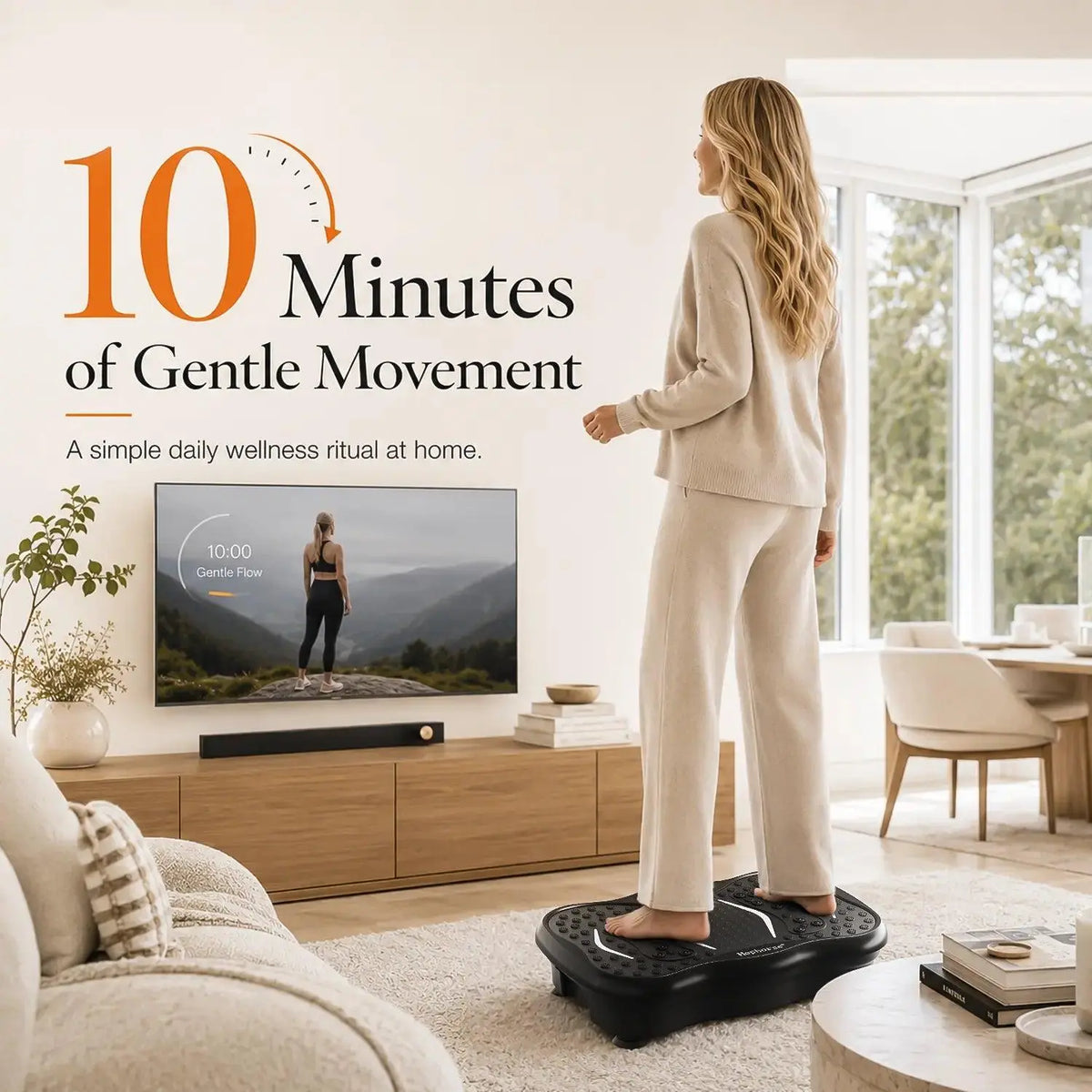
A vibration plate and a walking pad can both fit into a home fitness routine, but they serve different purposes. A walking pad is designed for walking, making it a practical choice if you want to add more steps to your day. A vibration plate uses a vibrating platform that creates a different type of exercise experience, often paired with standing positions, squats, calf raises, or resistance-band movements. The better option depends on how you like to move, how much space you have, and what you want from your workouts. If you enjoy walking while watching TV or working at a desk, a walking pad may suit you better. If you prefer short, compact sessions with adjustable settings, a vibration plate may be worth considering.
In this guide
How Does a Vibration Plate Compare With a Walking Pad?
What a vibration plate does
A vibration plate has a platform that vibrates while you stand on it or perform selected exercises. The vibration provides an additional physical stimulus, and your muscles may engage as you maintain your position or move through controlled exercises. Many home models include adjustable intensity settings, and some come with resistance bands for adding simple upper-body movements.
A vibration plate is compact and can be convenient for people who want a dedicated spot for brief home exercise sessions. However, standing on a vibrating platform is not the same as walking, and a short session should not automatically be counted as equivalent to a similar amount of moderate-intensity walking.
What a walking pad does
A walking pad is a compact treadmill designed primarily for walking indoors. Depending on its design, it may fit beneath a standing desk or be used in a living room while watching television. The belt moves beneath your feet, so you actively walk and repeatedly move your legs throughout the session.
Walking pads are particularly useful for people who want to build a regular walking habit without relying on the weather or finding time to travel outdoors. They generally need more clear floor space than a vibration plate, and the belt, motor, and your footsteps produce some noise.
The main difference: A walking pad helps you accumulate walking time. A vibration plate offers a different form of vibration-based exercise. Neither device is automatically better for everyone, and neither replaces every component of a balanced fitness routine.
Vibration Plate vs Walking Pad: Key Differences
Use this side-by-side comparison to narrow down your options before looking at individual models.
| Feature | Vibration Plate | Walking Pad |
|---|---|---|
| Main activity | Standing positions and controlled exercises on a vibrating platform | Walking on a moving belt |
| Movement style | Vibration-based, with optional bodyweight or band exercises | Repeated walking steps |
| Typical session | Short, focused sessions that fit your comfort level and the manual | Walking sessions that can be divided into convenient blocks |
| Space needs | Usually a small footprint | Needs enough room for the machine and safe walking clearance |
| Desk use | Not designed for walking while working at a desk | Some models support under-desk walking |
| Intensity control | Often adjusted through vibration levels or preset modes | Usually adjusted through walking speed and, on some models, incline |
| Walking activity | Does not provide the same activity as walking | Directly supports an indoor walking routine |
| Best starting point | Someone interested in compact vibration-based exercise | Someone who wants to walk more consistently |
Which One Is Better for Weight Loss?
If weight management is one of your goals, it helps to look beyond the machine itself. Sustainable weight management depends on several factors, including overall physical activity, eating habits, sleep, and consistency over time.
A walking pad allows you to walk continuously at a pace that suits your current fitness level. Walking can contribute to your overall activity, and brisk walking is one example of moderate-intensity aerobic activity in U.S. physical activity guidelines.
A vibration plate can add variety to a home workout, particularly when you combine it with controlled movements. However, research on whole-body vibration does not establish it as a direct substitute for regular aerobic exercise, and results can vary with the device, training protocol, and individual.
A realistic approach: Choose the option you can use comfortably and consistently. For broader fitness benefits, consider combining enjoyable aerobic activity, muscle-strengthening exercises, and everyday movement rather than relying on one machine alone.
Which Is Better for Your Lifestyle?
Choose a walking pad if you want more walking time
A walking pad may be a better fit if you enjoy walking or want to add movement to an otherwise sedentary day. It can be especially practical for people who work from home, prefer indoor exercise, or like to watch a show while walking.
- You want to increase the amount of time you spend walking.
- You prefer a familiar activity with adjustable speed.
- You want to walk during a work break or while watching TV.
- You have enough floor space and a suitable electrical outlet.
Choose a vibration plate if you want a compact exercise station
A vibration plate may suit you if you have limited room, prefer brief exercise sessions, or want to explore vibration-based movement. Adjustable controls can make it easier to begin at a comfortable setting, while resistance bands on selected models offer additional ways to move.
- You want a compact piece of equipment for a bedroom or workout corner.
- You prefer short sessions instead of walking continuously.
- You want to combine standing positions with simple bodyweight exercises.
- You value adjustable vibration settings and straightforward controls.
What if you are a beginner or over 40?
Age alone does not determine which machine is right for you. Your mobility, balance, current activity level, exercise preferences, and any health considerations matter more when choosing equipment.
If you are returning to exercise after a long break, begin with an activity you can perform comfortably and safely. A walking pad offers control over walking pace, while a vibration plate offers control over vibration settings. Neither should be assumed to be safe for every person simply because the activity is described as low impact.
How to Fit Each Machine Into a Home Workout
A simple walking pad routine
Start by following your walking pad's setup and safety instructions. Stand securely on the side rails before starting the belt, begin at a slow pace, and increase speed only when you feel comfortable.
- Begin with a few minutes at an easy walking pace.
- Continue at a comfortable speed that allows you to maintain control and good posture.
- Slow down before ending the session, following the machine's instructions.
- Build your walking time gradually as your fitness and schedule allow.
Use the handrail if your model includes one and you need additional support. Avoid reading or using a phone in a way that distracts you from safe walking, especially while learning the controls.
A simple vibration plate routine
Before your first session, read the manual for your specific model. Place the plate on a stable, level surface, clear the surrounding area, and learn how to stop the machine. Start at a low setting and keep your movements controlled.
- Get positioned. Stand with your feet comfortably apart and knees slightly bent. Use a stable support nearby if needed.
- Begin gently. Choose a low setting and a brief session within the manufacturer's guidance.
- Add simple movements. If comfortable, try a shallow squat or calf raise while maintaining balance and control.
- Finish carefully. Stop the machine before stepping off, and stop the session if you feel unwell or uncomfortable.
For more detailed setup advice, read our guide on how to use a vibration plate. You can also explore vibration plate exercises for home workouts for ideas that can be adapted to your experience level.
Remember: There is no need to start at the highest speed or make your first session long. Follow the instructions for your exact model, and increase duration or intensity gradually only if you tolerate the activity well.
What to Look for Before Buying
Once you know which type of movement you prefer, compare the practical details that will affect daily use.
For a vibration plate
- Adjustable settings: Look for controls that make it easy to select a comfortable starting intensity.
- Stable construction: Check the platform design, surface grip, and stated user weight limit.
- Useful accessories: A remote or resistance bands may make selected routines more convenient.
- Storage and noise: Check the dimensions and product-specific noise information for your home.
- Clear instructions: A readable manual and accessible customer support can be valuable for first-time users.
For a walking pad
- Walking surface: Check the belt dimensions and ensure they suit your stride.
- Speed range: Choose a model that supports your intended walking pace.
- Weight capacity: Confirm the manufacturer's maximum user weight and use the equipment within its limits.
- Noise and placement: Consider motor noise, footsteps, flooring, and neighbors in shared buildings.
-
Safety features: Review the controls, stopping procedure, and whether a handrail is available if you need one.

Which HOPHORSE Vibration Plate Might Fit Your Routine?
If you decide a vibration plate better matches your needs, compare the model details rather than choosing by appearance alone. Different models can have different controls, dimensions, and speed ranges.
For a straightforward everyday routine
The HOPHORSE Whole Body Vibration Plate is an option to consider if you want a compact platform for home workouts. Its listed features include adjustable speed settings, preset modes, a remote control, and resistance bands. Check the current product page for the exact specifications of the selected version.
For a higher stated weight capacity
The HOPHORSE Pro Max Vibration Plate lists a maximum user weight capacity of 460 lb and 200 speed levels. If capacity and platform design are priorities, review the model's dimensions, instructions, and full specifications before deciding.
For another compact option
The HOPHORSE SYC Vibration Plate is another model to compare for home use. Confirm its current settings, included accessories, and dimensions on the product page, since specifications may differ between models and versions.
To compare available models in one place, browse HOPHORSE vibration plates.
Still deciding?
Compare the available HOPHORSE models, specifications, and included accessories to find a vibration plate that fits your space and preferred routine.
Safety Tips for Beginners
Both machines require attention to setup and safe use. Read the manufacturer's instructions before starting, keep the surrounding area clear, and use the equipment only as directed.
- Start at a comfortable intensity and build up gradually.
- Stop if you experience pain, dizziness, unusual shortness of breath, or other concerning symptoms.
- Keep children and pets away from moving belts and operating equipment.
- Place the equipment on an appropriate, stable surface and follow the manufacturer's placement instructions.
- Do not assume a low-impact label means an activity is suitable for every health condition.
If you are pregnant, have a pacemaker, have recently had surgery, have a heart condition, have a risk of blood clots, have severe osteoporosis, or have another condition that may affect safe exercise, consult a healthcare professional before using a vibration plate or starting a new exercise routine. If you are unsure whether a walking pad is appropriate for your balance or mobility, seek individualized guidance before use.
The Bottom Line: Vibration Plate or Walking Pad?
When comparing a vibration plate vs walking pad, start with the kind of movement you want to do regularly. A walking pad is the more direct choice for building an indoor walking habit and adding walking time throughout the day. A vibration plate may be a practical fit if you prefer a compact station for short, vibration-based sessions and controlled exercises.
Neither is a universal winner. Think about your available space, preferred activities, comfort, safety considerations, and how each machine fits your everyday schedule. The most useful equipment is the equipment you can use appropriately and consistently.
Interested in a compact home workout option?
Explore HOPHORSE vibration plates and compare the features that matter most to your routine.
Frequently Asked Questions
1. Is a vibration plate better than a walking pad?
Neither is better for everyone. A walking pad is designed for walking, while a vibration plate provides vibration-based exercise. Choose according to your goals, available space, and preferred type of movement.
2. Can a vibration plate replace walking?
No. Standing on a vibration plate does not provide the same activity as walking. If your goal is to increase your walking time, a walking pad or outdoor walking is a more direct option.
3. Which is better for weight loss, a vibration plate or walking pad?
Neither guarantees weight loss. A walking pad can help you accumulate walking activity, while a vibration plate can add variety to selected exercises. Long-term weight management depends on multiple lifestyle factors.
4. Is a vibration plate good for beginners over 40?
Some adults may find adjustable vibration settings convenient, but suitability depends on individual health, balance, and mobility. Start gently, follow the model's manual, and consult a healthcare professional if you have relevant health concerns.
5. Which machine takes up less space?
A vibration plate generally has a smaller footprint than a walking pad. Compare the actual dimensions and required clearance for each model, including the space needed to step on and off safely.
6. Can I use a vibration plate every day?
Use frequency and session length should follow the manufacturer's instructions and your individual tolerance. Begin with short, low-intensity sessions, allow time to recover as needed, and stop if you experience discomfort.
7. Is a vibration plate suitable for seniors?
It depends on the person's health, balance, mobility, and the device's instructions. Seniors with medical conditions, balance concerns, or a history of falls should consult a healthcare professional before use and should not assume a vibration plate is automatically safe.
8. What should I look for in a beginner-friendly vibration plate?
Look for understandable controls, adjustable settings, a stable platform, a clear user manual, and a suitable weight capacity. Compare the specifications of individual models in the HOPHORSE vibration plate collection before choosing.
Share:
Vibration Plate Before and After: What to Realistically Expect
Oscillating vs Linear Vibration Plates: What's the Difference?