
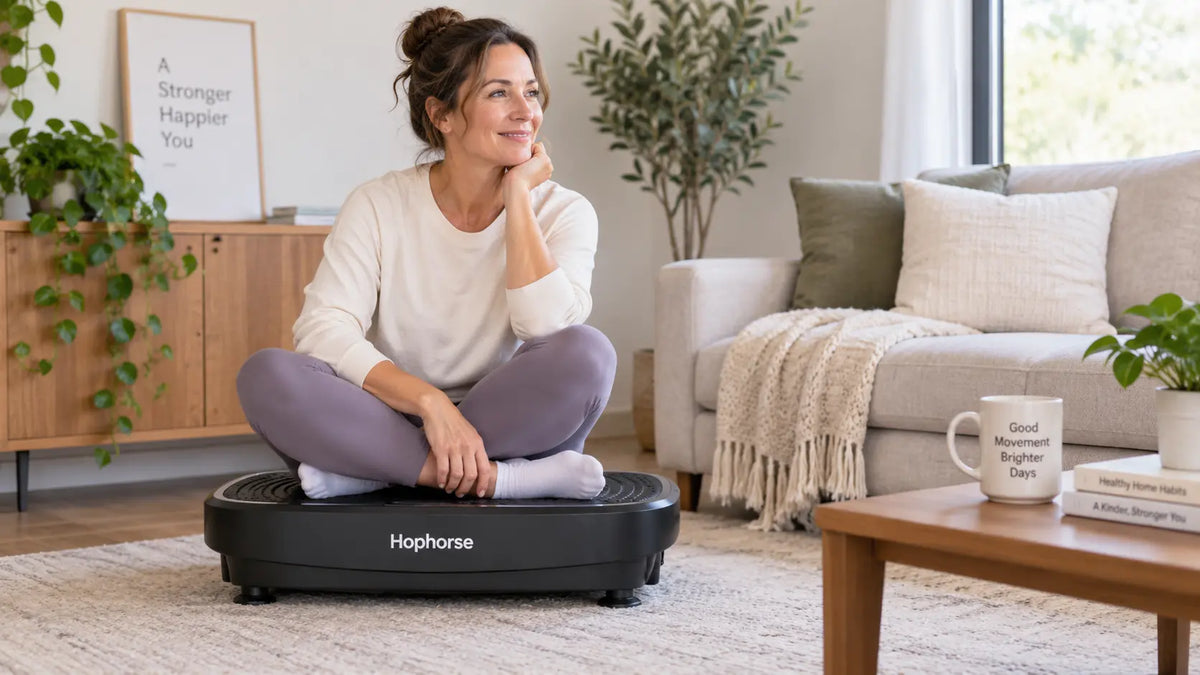
Can you sit on a vibration plate? Yes, seated use can be an option when the instructions for your specific vibration plate allow it. For beginners, one of the easiest approaches is to sit in a sturdy chair with both feet resting on the platform at a low, comfortable setting. Some machines may also allow you to sit directly on the platform, although that usually creates a more noticeable vibration through the hips and torso. Whichever setup you choose, keep the machine on a flat, stable floor, start gently, and follow your product manual. Sitting does not need to become a complicated workout—it can simply be another way to add short, low-impact movement to your home routine.
Quick Takeaways
- Seated vibration plate use is possible when your machine's instructions allow it.
- Beginners may find sitting in a sturdy chair with their feet on the platform easier to control than sitting directly on the plate.
- Keep the vibration plate itself on a flat, solid surface rather than placing it on a bed, couch, chair, or other furniture.
- Start at a low, comfortable level and keep your first seated sessions short.
- Higher speed is not automatically better. Comfort, control, and consistency matter more.
Can You Sit on a Vibration Plate?
Yes. A vibration plate does not have to be used only while standing. Depending on the machine and its instructions, you may be able to use it in a seated position, either with your feet on the platform or with your body directly on the platform.
For a first-time user, seated use can make the machine feel less intimidating. You do not have to think about performing squats or balancing through a standing routine right away. Instead, you can become familiar with the controls, vibration level, foot placement, and general feel of the platform.
That does not mean seated use should automatically be treated as easier at every setting. Sitting directly on the plate can transmit the vibration more noticeably through your hips and upper body. This is why a lower setting and a short trial are sensible starting points.

Two Beginner-Friendly Ways to Use a Vibration Plate While Sitting
When people talk about sitting on a vibration plate, they may be describing two different setups. Understanding the difference matters because each one feels different.
| Setup | What You Do | Beginner Consideration | Important Detail |
|---|---|---|---|
| Chair + feet on plate | Sit in a sturdy chair and place both feet on the vibration platform. | Usually easier to control when learning how the machine feels. | Keep all chair legs on the floor, not on the vibration plate. |
| Direct sitting | Sit directly on the platform if your product instructions permit this position. | The vibration may feel more noticeable through the hips and torso. | Begin with a low setting and keep the first trial short. |
Avoid improvising by putting the vibration plate on a sofa, mattress, ottoman, or chair. These surfaces can make the machine less stable and can change how vibration travels through the floor and equipment. The plate should remain on the stable surface recommended in your product manual.
Looking for a compact machine with adjustable settings for a simple home routine? Compare the current Hophorse vibration plates.
Compare Vibration PlatesHow to Sit on a Vibration Plate: Step by Step
If you are new to vibration training, keep the setup uncomplicated. The goal of the first few sessions is to feel stable and learn how your machine responds at different settings—not to chase maximum intensity.
- Place the machine on a level floor. Make sure the platform is stable and has enough open space around it for easy entry and exit.
- Position a sturdy chair nearby. Sit far enough forward that both feet can rest naturally on the platform without stretching your legs.
- Start at a low setting. Give yourself time to become familiar with the sensation before making any adjustment.
- Keep both feet comfortably supported. Avoid forcing an unusually wide or narrow position just to make the vibration feel stronger.
- Stay relaxed rather than rigid. Keep your posture natural and avoid deliberately tensing your entire body.
- Increase gradually only when comfortable. A higher number is not necessary simply because the machine offers it.
If you eventually want to add standing movements, read our guide on how to use a vibration plate before progressing to exercises such as gentle knee bends or calf raises.

A Simple 5–10 Minute Seated Beginner Routine
You do not need to remain on the plate for a long period to make it part of your daily movement routine. For beginners, it is more practical to focus on a short session that feels controlled and easy to repeat.
| Time | Position | What to Focus On |
|---|---|---|
| Minutes 0–2 | Comfortable seated position with both feet on the plate | Use a low setting and become familiar with the vibration. |
| Minutes 2–4 | Same seated position | Add slow, comfortable heel lifts if they feel natural and controlled. |
| Minutes 4–6 | Feet relaxed on the platform | Return to a neutral position and check that you still feel comfortable. |
| Minutes 6–8 | Optional continued seated movement | Continue only if the setting and position remain easy to control. |
| Minutes 8–10 | Relaxed finish | Lower the setting if needed, stop the machine, and stand up carefully. |
You do not have to use every minute shown above. A shorter session is perfectly reasonable while you are learning. Your product manual should take priority over any general routine, and you should stop if you feel dizzy, numb, unstable, or otherwise uncomfortable.
If you are unsure how the numbers on your machine relate to intensity, see our vibration plate speed levels chart for beginners. Different models can use different speed scales, so it is more useful to think in terms of low, moderate, and higher intensity than to assume one number feels the same on every machine.

Common Mistakes When Sitting on a Vibration Plate
Seated use is simple, but a few habits can make the experience less comfortable or less practical.
- Starting too high: There is no need to begin at a strong setting simply because the machine has many speed levels.
- Putting furniture on the plate: Keep chair legs on the floor and the vibration plate on its intended stable surface.
- Using an awkward chair position: If you have to reach forward or stretch your legs to contact the plate, move the chair closer.
- Ignoring the product manual: Not every machine has identical recommended positions or controls.
- Assuming longer is always better: A short routine you can comfortably repeat is more practical than forcing a long session.
- Continuing through discomfort: Stop the session if you feel dizzy, unstable, numb, or uncomfortable.
Who Should Be More Cautious With Vibration Plate Use?
A vibration plate is home fitness equipment, not a medical treatment. If you have a health condition or are unsure whether whole-body vibration is appropriate for you, individual guidance matters more than a general online routine.
Older adults should also consider balance and the ability to get on and off the equipment safely. If standing balance is uncertain, do not use a chair or wall in an improvised way that conflicts with the equipment instructions. Follow the product manual and seek professional guidance when needed.

Which Hophorse Vibration Plate Makes Sense for a Beginner?
For most beginners, the Hophorse Whole Body Vibration Plate is a practical starting point. It is designed around compact home use, adjustable controls, a stable platform, and simple daily routines. Included resistance bands also give you the option to add upper-body movement later as you become more comfortable with standing exercises.
If you want a higher-capacity platform with more room to progress, the Hophorse Pro Max Vibration Plate may be a better fit. It offers a 460 lb capacity and 200 adjustable speed levels for users who want additional support and a broader range of settings.
There is no need to choose a model based on the highest possible speed alone. For home use, practical considerations such as platform stability, available space, controls, noise level, and how easily the machine fits into your normal routine are often more useful.
Frequently Asked Questions
Can you sit directly on a vibration plate?
Yes, you may be able to sit directly on a vibration plate if the instructions for your specific model permit seated use. Direct sitting can make the vibration feel more noticeable through your hips and torso, so beginners should start with a low, comfortable setting and keep the first session short.
Is sitting on a vibration plate good for beginners?
Seated use can be a beginner-friendly way to become familiar with a vibration plate. Sitting in a sturdy chair with both feet on the platform may feel easier to control than starting immediately with standing exercises.
How long should you sit on a vibration plate?
Keep your first seated sessions short and follow the instructions for your specific machine. Many beginners prefer a brief session of a few minutes and gradually build a 5–10 minute overall routine as they become more comfortable.
What speed should you use while sitting on a vibration plate?
Start with a low, comfortable setting rather than choosing a high number. Speed scales vary between machines, so increase gradually only when you can stay relaxed, stable, and comfortable.
Can seniors sit on a vibration plate?
Some older adults may prefer a seated setup because it reduces the need to balance while standing. However, anyone with significant medical concerns, severe osteoporosis, recent surgery, heart conditions, or uncertainty about vibration exercise should consult a healthcare professional before use.
Who should consult a healthcare professional before using a vibration plate?
Consult a healthcare professional before use if you are pregnant, use a pacemaker or other implanted electronic device, recently had surgery, have a serious heart condition, have a known blood clot risk, have severe osteoporosis, or have another condition that may affect whether vibration exercise is appropriate for you.
The Bottom Line
So, can you sit on a vibration plate? Yes—when your machine supports seated use, it can be a simple way to introduce vibration into a low-impact home movement routine. Beginners may want to start by sitting in a stable chair with their feet on the platform, using a low setting, and keeping the session short.
As you become more familiar with the machine, you can decide whether you prefer seated sessions, standing movements, or a combination of both. The most useful routine is not necessarily the most intense one. It is the one that feels manageable, fits your home, and is easy enough to repeat consistently.
Explore compact, adjustable Hophorse models designed for simple, beginner-friendly home movement.
Shop Hophorse Vibration PlatesThis article is for general fitness information only and is not medical advice. Always follow the instructions supplied with your vibration plate and seek professional guidance when appropriate.
Share:
Vibration Plate vs Walking: What’s the Difference?
Vibration Plate for People Who Sit All Day: 10-Min Routine